Data Queue Entries (vp777)
Idea : After spraying and grooming the pool we could use the overflow to rewrite the header of the NP_DATA_QUEUE_ENTRY sitting next to the vulnerable chunk, and the forged header turns that into arbitrary read and write.
1. Arbitrary Read Using Unbuffered Entries
Works when the overflow lets you fully control the bytes written past the chunk and you already know the address you want to read.
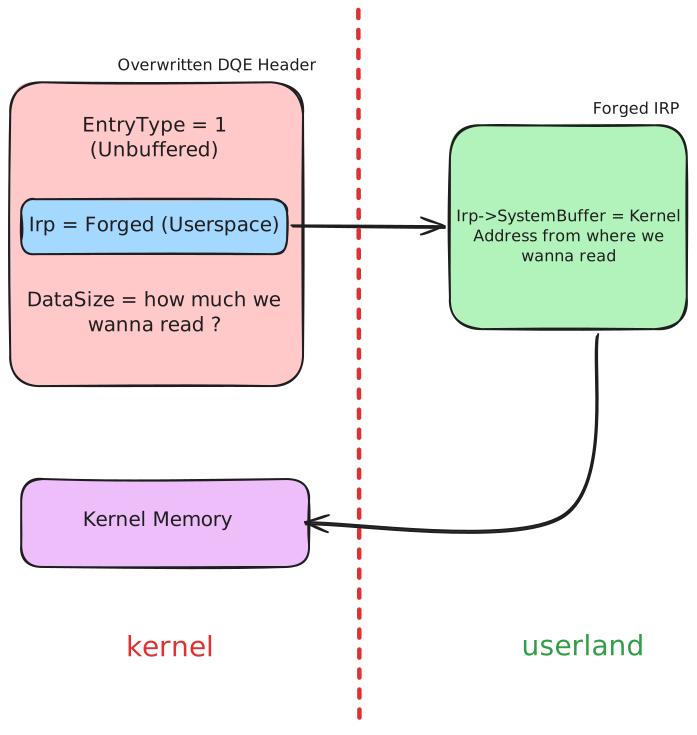
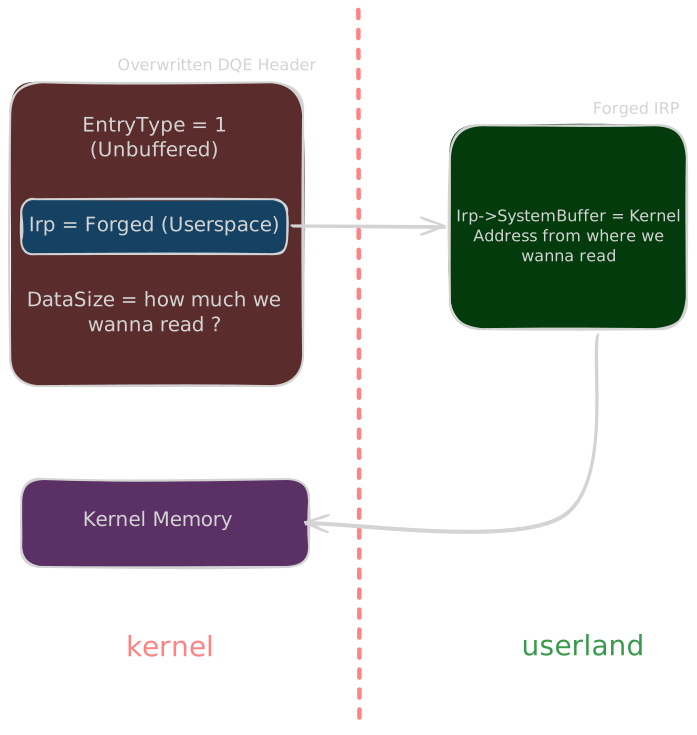
Forge an unbuffered entry whose Irp points at a forged IRP with SystemBuffer set to the kernel address to read from:
DATA_QUEUE_ENTRY:
    NextEntry = whatever;
    Irp = Forged IRP Address;   // can be a userspace address if SMAP is absent
    SecurityContext = 0;
    EntryType = 1;              // unbuffered
    QuotaInEntry = 0;
    DataSize = arbitrary read size;

IRP->SystemBuffer = kernel address to read from;
Reading DataSize bytes from the pipe copies them from wherever IRP->SystemBuffer points.
2. Arbitrary Read Using Buffered Entries
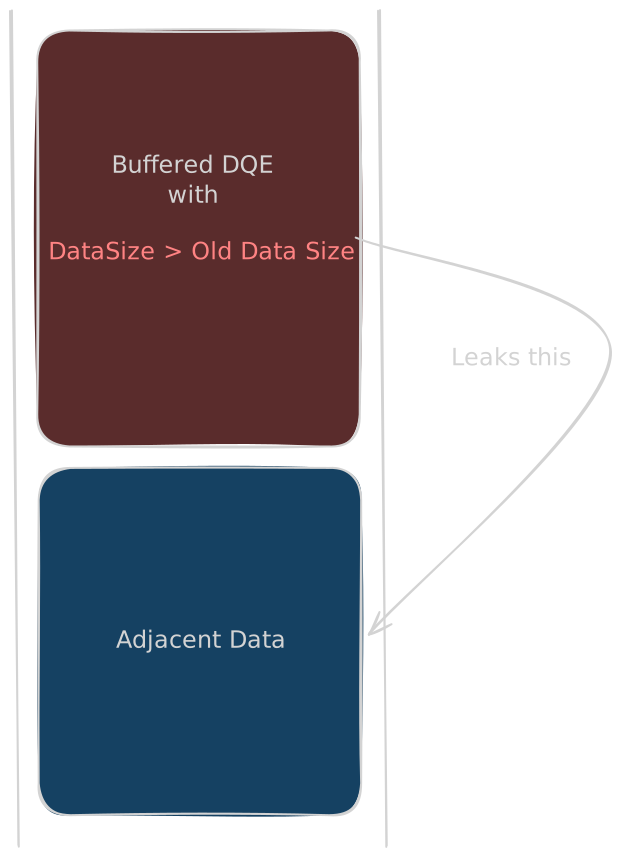
Before you know any address, there is nothing to point a forged IRP at. This variant makes use of the pool overflow to rewrite the DQE DataSize field of a buffered entry with a bigger value so that it reads past the entry’s real data into whatever sits behind it.
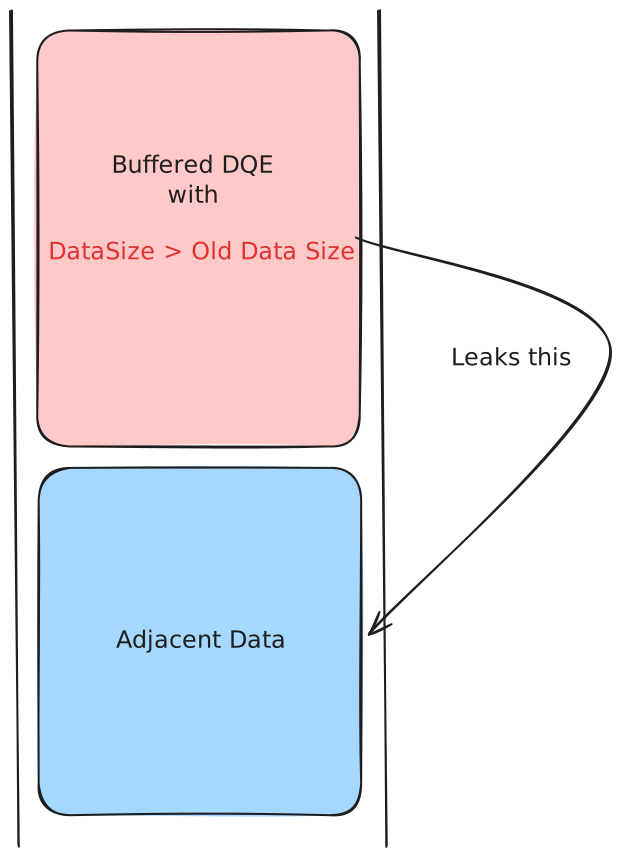
DATA_QUEUE_ENTRY:
    NextEntry = whatever;
    Irp = 0;
    SecurityContext = 0;
    EntryType = 0;              // buffered
    QuotaInEntry = 0;
    DataSize = something bigger than the original size;
This technique can be used to leak pointers/heap metadata and other interesting data that could be found after our DATA_QUEUE_ENTRY.
3. Arbitrary Read with Limited Control (Flink Only)
Some overflows only let you write a few bytes, or the bytes are not yours to choose (a memset with fixed values, for example). Then the best you can do is overwrite the Flink of a victim entry and point it at data you control, an “undercover” DQE, and run the reads above through it.
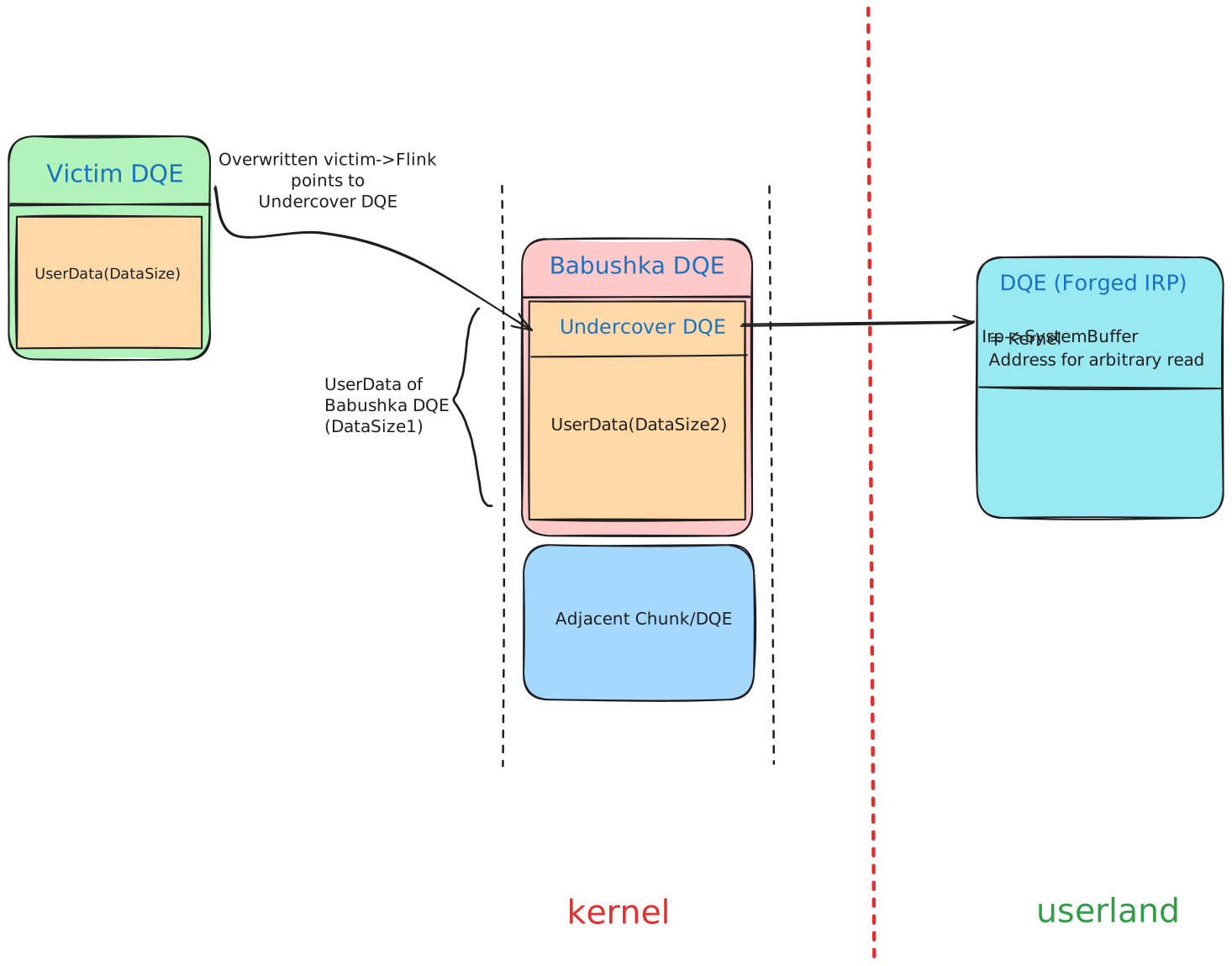
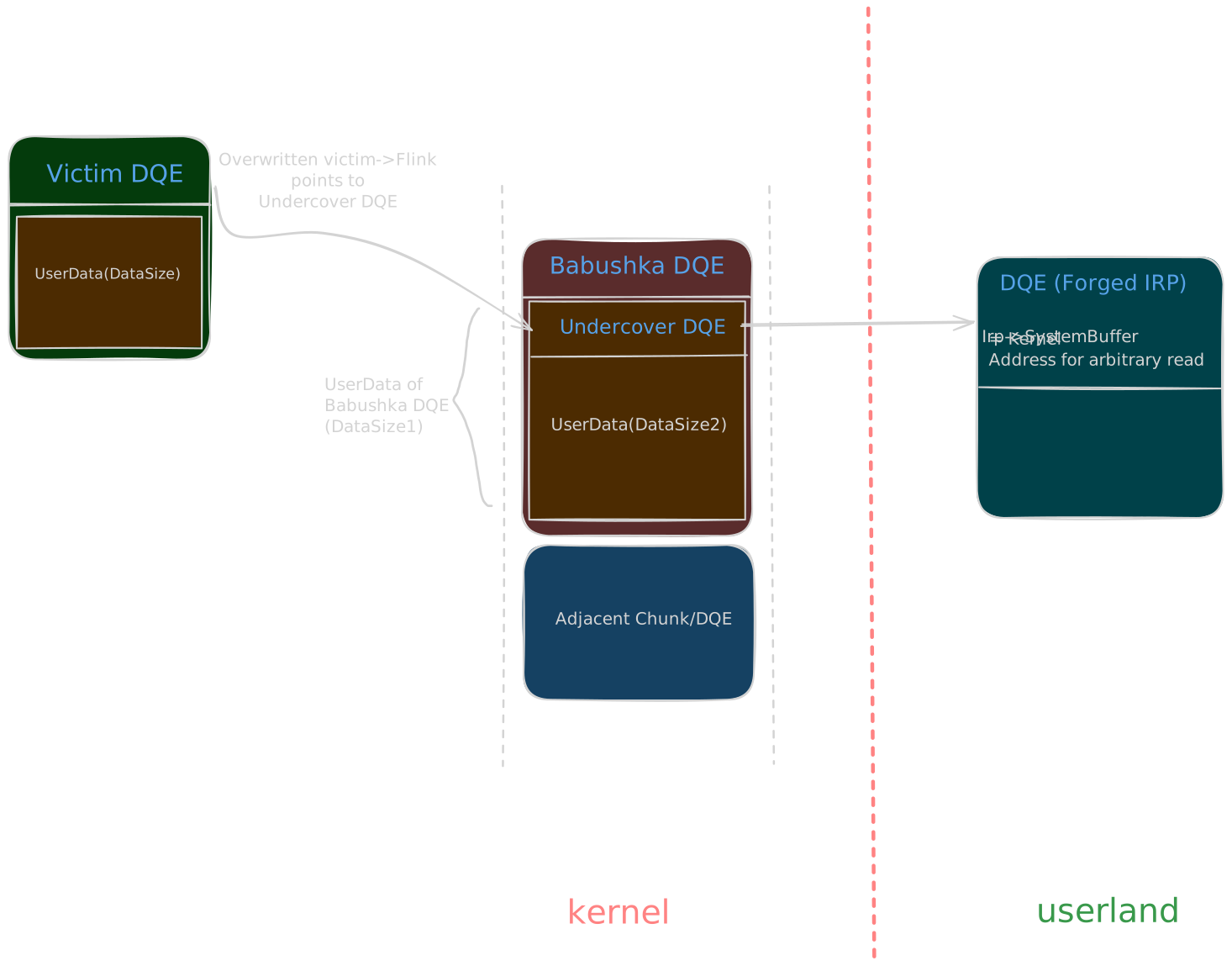
In the diagram, “Babushka” refers to a Russian nesting doll ie. one object contains another object of the same kind. So the core idea is be to create a babushka DQE such that its data contains another DQE(“undercover” DQE here)
- The victim entry’s
Flinknow points to the undercover DQE, which is composed of user-controlled data. DataSize1= undercover header +DataSize2, andDataSize2=DataSize1- undercover header.DataSize2should be at leastDataSize1-sizeof(DATA_QUEUE_ENTRY)+nto read n bytes from the adjacent memory/chunk.- To read
nbytes from chunk 2: readDataSize + DataSize1 - sizeof(DATA_QUEUE_ENTRY) + n.
PeekNamedPipe
Since Windows 7, LIST_ENTRY unlinking validates entry->Flink->Blink == entry (safe-unlink). Reading DataSize bytes causes the overflowed DATA_QUEUE_ENTRY to be unlinked, and the corrupted pointers trigger a bugcheck. PeekNamedPipe avoids this by walking the queue without unlinking entries, allowing the undercover DATA_QUEUE_ENTRY to be activated without triggering safe-unlink.
The practical flow:
- Groom the pool so the redirected
Flinklands on the undercover DQE. - Overflow the victim’s
Flink. - Use
PeekNamedPipewith a small size to activate the undercover DQE and leak adjacent pool memory (ASLR bypass). - Modify the contents of the specified userspace address to hold a forged
DATA_QUEUE_ENTRYthat facilitates the arbitrary read. - Use
PeekNamedPipewith size =DataSize + DataSize2 + nto leaknbytes from the address set in theSystemBufferof the IRP.
4. Arbitrary Write
At this point we can read kernel memory but not change it. Now we want to modify our own process token to elevate privileges from low integrity. The classic move is copying the SYSTEM process token over our own.
The write comes from the quota mechanism ie. when a buffered write exceeds the pipe quota in blocking mode, the entry waits in the queue as a stalled write with QuotaInEntry < DataSize, holding its IRP. Every read frees quota, QuotaInEntry climbs back up, and once it reaches DataSize, npfs completes the IRP through IofCompleteRequest. An entry forged to look like a stalled write therefore decides which IRP gets completed, and the IRP decides where the write lands: its AssociatedIrp holds the source address to copy from and its UserBuffer holds the destination to overwrite.
Say the pipe quota is 0x1000 bytes and it is already full. A WriteFile of 0x800 bytes cannot fit, so npfs queues it with QuotaInEntry = 0 and parks the write IRP. Reading 0x200 bytes from the other end frees 0x200 of quota, and that credit goes to the stalled write, so QuotaInEntry becomes 0x200. Once enough reads bring QuotaInEntry up to 0x800 (the write’s DataSize), npfs decides there is finally room and completes the pending IRP. The write only “finishes” when the queue has room for it.
The forged entry abuses exactly this bookkeeping:
DATA_QUEUE_ENTRY:
    NextEntry.Flink = accessible address;
    Irp             = forged IRP address;
    SecurityContext = 0;
    EntryType       = 0;              // buffered
    QuotaInEntry    = DataSize - 1;   // one byte of quota left
    DataSize        = write size;

Forged IRP:
    Flags          &= ~IRP_DEALLOCATE_BUFFER | IRP_BUFFERED_IO | IRP_INPUT_OPERATION;
                   // clears only IRP_DEALLOCATE_BUFFER; the input flags are kept/set here
    AssociatedIrp  = source address;
    UserBuffer     = destination address;
    ThreadListEntry.Flink = ThreadListEntry.Blink = &forged IRP's ThreadListEntry;
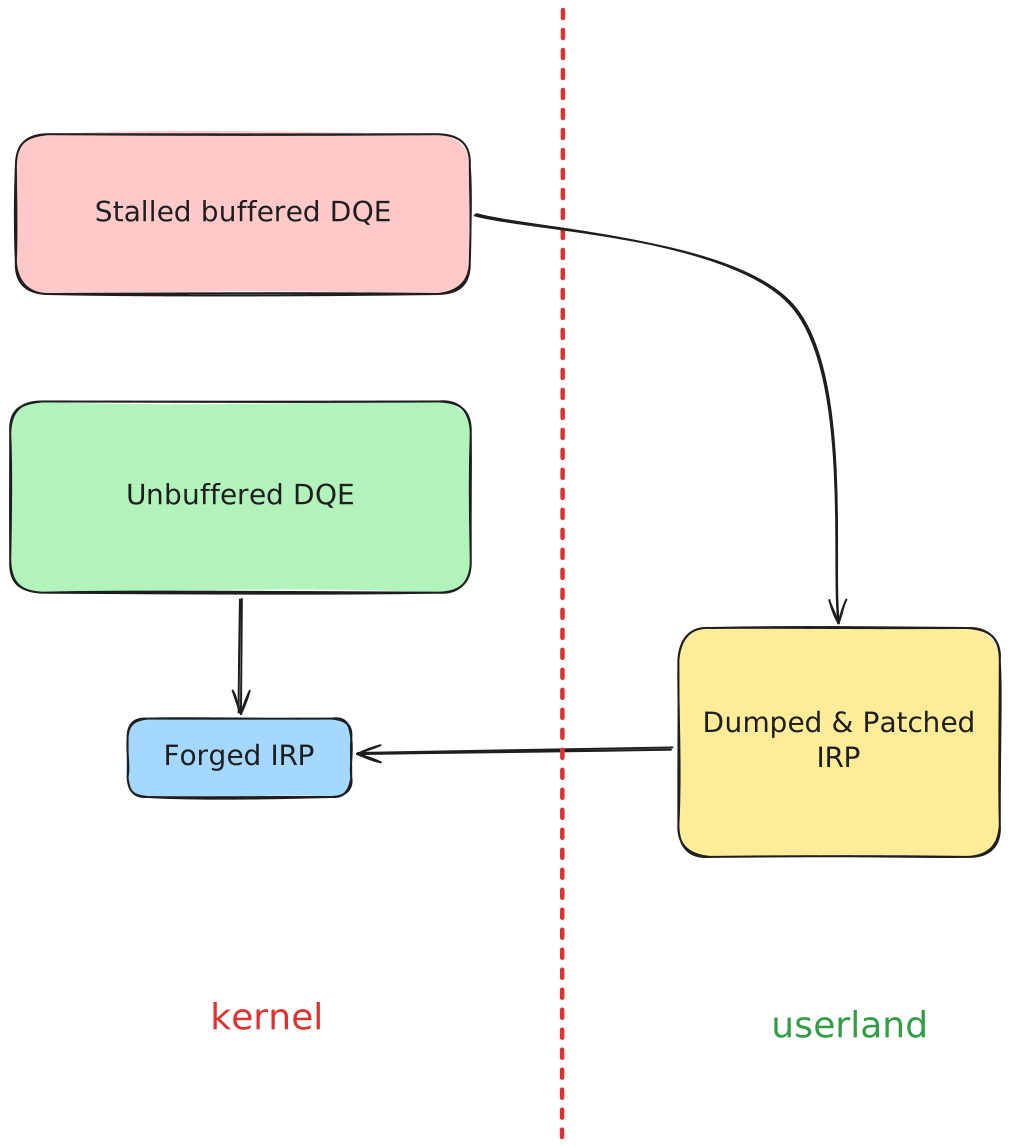
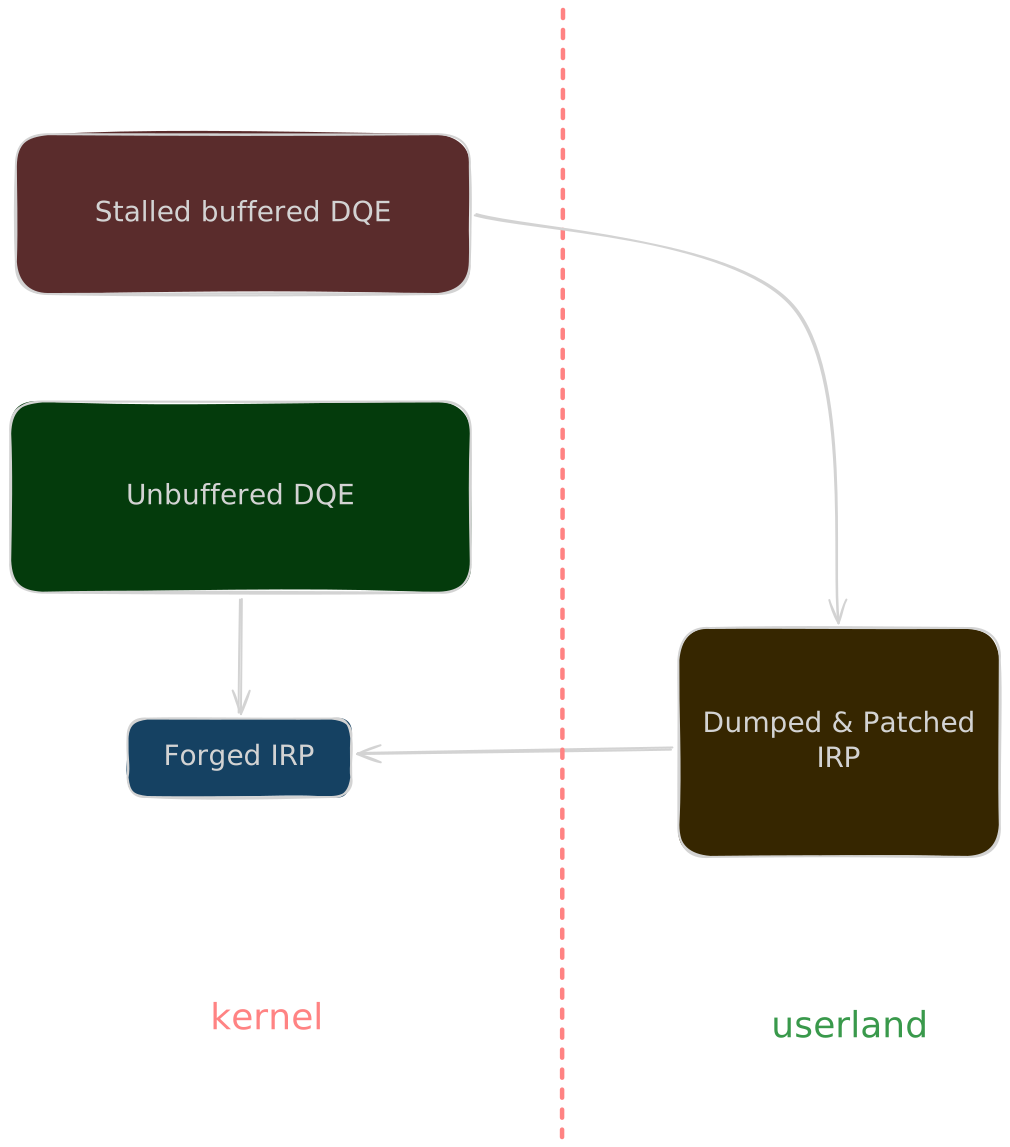
The practical flow:
- Spray the pool with DQEs.
- Establish the arbitrary read using the above techniques.
- Use the leaked pointers to identify a DQE adjacent to the undercover DQE (
leaked_entry->Flink->Blinkgives its address) and find the pipe handle that owns it. - Create a new buffered DQE entry holding an IRP on that handle by writing more than the pipe quota so the write stalls in the queue.
- Use the arbitrary read to find the new entry’s address (
leaked_entry->Flink), then its IRP address, and dump the full IRP contents. We need to use the leaked IRP as otherwise, a fake one would failIofCompleteRequest’s validation. - Forge the stalled write DQE entry around the patched IRP:
QuotaInEntry = DataSize - 1andDataSize = write size. The one-byte quota gap is the trigger, since the queue now looks like a write waiting for exactly one byte of room. Host the IRP in an unbuffered entry, becauseIofCompleteRequesttends to free the buffer it points at. - Read a single byte from the pipe.
QuotaInEntryclimbs toDataSize, npfs decides the stalled write has room, andIofCompleteRequestcompletes the forged IRP. The kernel then copies from the address inAssociatedIrpto the address inUserBuffer, giving us arbitrary write :)