Backend Segment Allocation
Backend segment allocation manages page-backed memory ranges. Frontend allocators request memory from this layer when they need more backing storage.
Size
In the kernel, segment allocation applies when:
Sizeis a multiple of a page andSize <= 0x7f0000Sizeis not a multiple of a page and0x20000 < Size <= 0x7f0000
It is a bit different in userland. There are two categories, differing by block unit:
0x20000 < Size <= 0x7f000
  unit: 0x1000   (1 page)

0x7f000 < Size <= 0x7f0000
  unit: 0x10000  (16 pages)
Both units are called “page” here. A block (chunk) consists of single or multiple pages. For example, allocating 0x1450 bytes allocates 2 pages of 0x1000, and 0x1337 allocates 0x2000 (2 page units), with the extra 0x2000 - 0x1337 recorded in the unused bytes.
Page Segments and Ranges
Page Segment
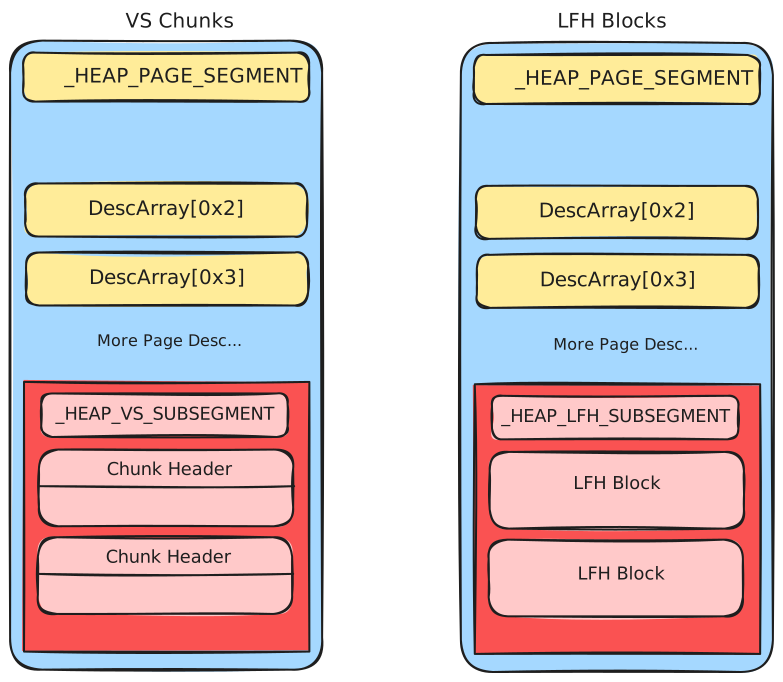
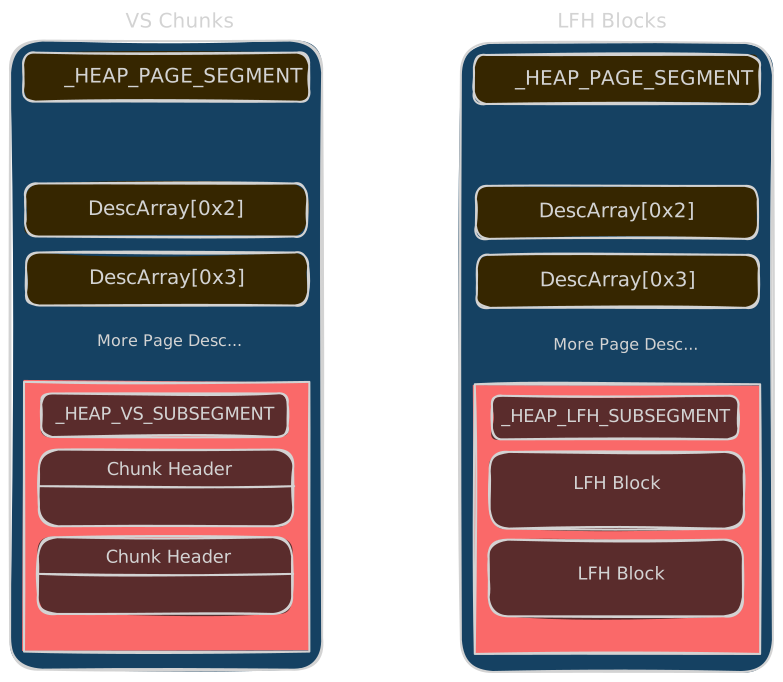
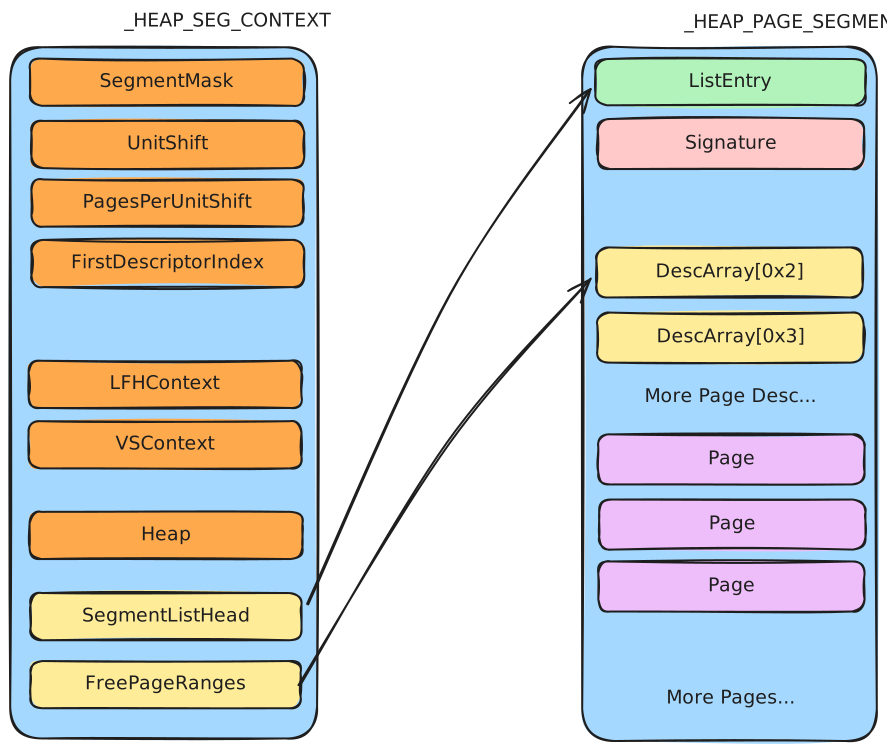
_HEAP_PAGE_SEGMENT is the memory pool of segment allocation. When no page segment is available, a new one is allocated from the system (MmAllocatePoolMemory), but only the required structure is allocated at the beginning (the block part is not allocated until needed). Each page segment is inserted into a double linked list.
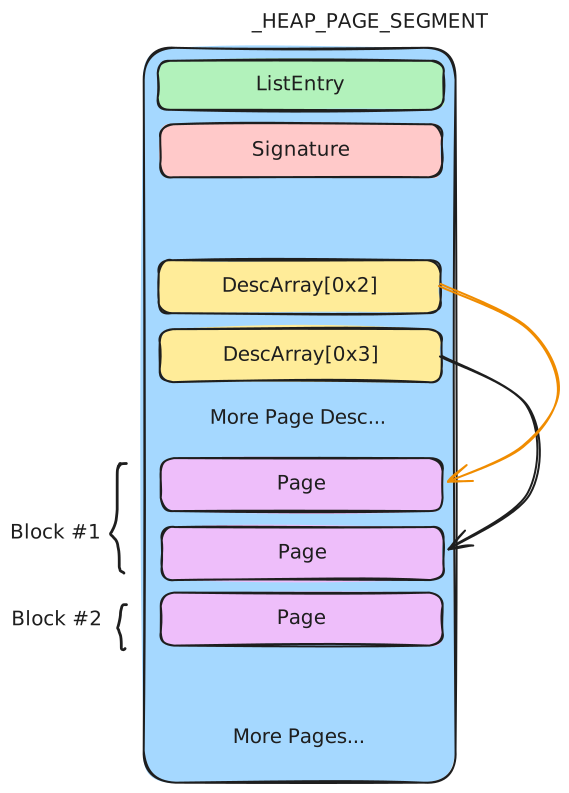
| Field | Meaning |
|---|---|
ListEntry | _LIST_ENTRY (Flink/Blink). Points to the next / previous page segment in the linked list. |
Signature | Signature of the page segment used to verify the page segment (encoded, see below). |
DescArray[256] | Page range descriptor array. Each element corresponds to one page one-to-one. |
Pages | The memory pool of the segment allocator (starts at 0x2000). |
Signature
Signature = Segment ^ SegContext ^ RtlpHpHeapGlobals ^ 0xA2E64EADA2E64EAD
Page Range Descriptor
_HEAP_PAGE_RANGE_DESCRIPTOR is the descriptor for a page. It indicates the status (Allocated or Freed) and information of each page in the page segment, such as whether the page is the beginning of a block or the size of the block. It can be in an allocated or freed state; freed descriptors are stored in FreePageRanges, an rbtree.
Allocated (block header):
| Field | Meaning |
|---|---|
TreeSignature | Signature of the page range descriptor. The value is always 0xccddccdd. Only present at the beginning of a block. |
UnusedBytes | Unused bytes in an allocated block. |
RangeFlag | Indicates the page status (see below). |
CommittedPageCount | Number of pages committed in the corresponding block. |
Key | _HEAP_DESCRIPTOR_KEY. Stores the size of the page corresponding to the descriptor and the number of committed pages. |
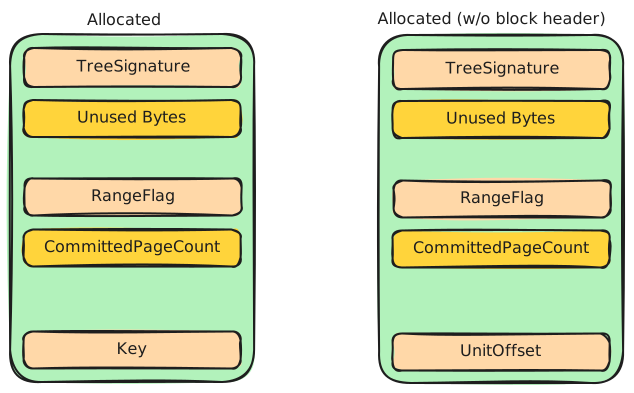
Allocated (not header): If the page is not the block header, TreeSignature is not meaningful for the block and the Key field’s UnitCount is interpreted as UnitOffset, the offset of the page within the block (used to walk back to the header page).
Freed:
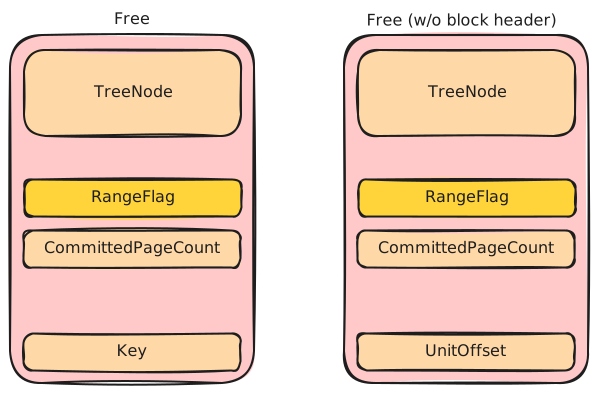
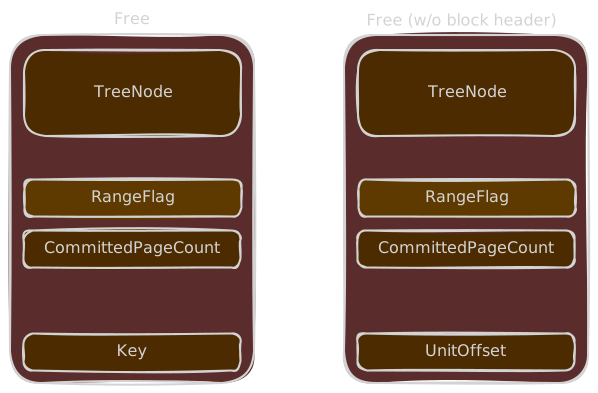
The freed descriptor is a node of the FreePageRanges rbtree: Left points to a descriptor whose block size is smaller, Right to a descriptor whose block size is greater, and ParentValue points to the parent node (the lowest 1 bit determines whether the parent is encoded). The Key is the same as in the allocated case.
Range Flags
RangeFlags indicate page state.
Important bits from the notes:
- bit 1: allocated
- bit 2: block header
- bit 3: committed
Allocator interpretation:
Allocator
- LFH:
RangeFlags & 0xc = 8 - VS:
RangeFlags & 0xc = 0xc
Descriptor Key
_HEAP_DESCRIPTOR_KEY
0x0    EncodedCommittedPageCount (2 bytes)
0x2    LargePageCost (1 byte)
0x3    UnitCount (1 byte)
| Field | Meaning |
|---|---|
EncodedCommittedPageCount | The number of pages committed in the block, stored encoded (see below). Only used in the block header. |
LargePageCost | Cost of a large page. |
UnitCount | The size of the block, in page count. |
Encoding
CommittedPageCount = ~EncodedCommittedPageCount
SegContext
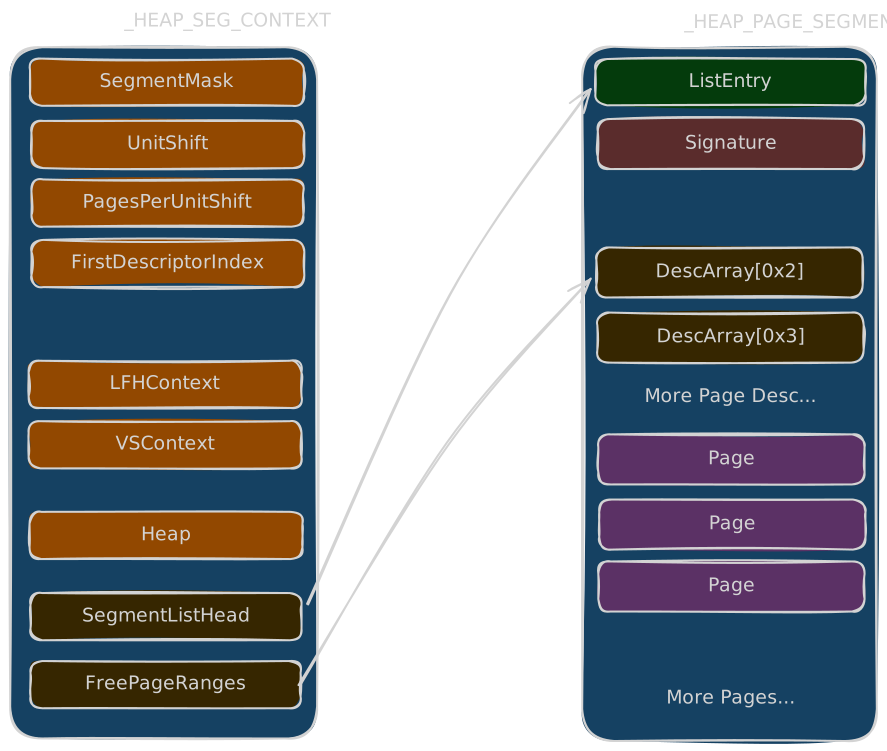
_HEAP_SEG_CONTEXT is the core structure of the segment allocation. There are two SegContexts in each heap (Size <= 0x7f000 and 0x7f000 < Size < 0x7f0000).
| Field | Meaning |
|---|---|
SegmentMask | A mask used to find the page segment: Page segment = block ptr & SegmentMask. Valued 0xfffffffffff00000 for the 1 MB segment context. |
UnitShift | Used to calculate the index of the page descriptor: Index = block ptr >> UnitShift. |
PagesPerUnitShift | (1 << PagesPerUnitShift) indicates the size of a page unit in the SegContext: (1 << PagesPerUnitShift) * 0x1000. If the value is zero, the page unit is 0x1000. |
FirstDescriptorIndex | The index of the first page descriptor in the SegContext. |
LfhContext | Points to the LFH allocator in the segment heap. |
VsContext | Points to the VS allocator in the segment heap. |
Heap | Points to the _SEGMENT_HEAP it belongs to. |
SegmentListHead | _LIST_ENTRY. Points to the page segments in the segment allocator. It is a double linked list with an integrity check. |
FreePageRanges | _RTL_RB_TREE. Red-black tree of free page ranges (see below). |
Example values for the 0x1000-unit SegContext:
SegmentMask (0xfffffffffff00000)  Segment = ptr & SegmentMask
UnitShift (0xc)                   Index = ptr >> 0xc (page index)
PagesPerUnitShift (0x0)           page unit = 0x1000
FirstDescriptorIndex (0x2)
FreePageRanges
After releasing a block, its page descriptor is inserted into the FreePageRanges of the SegContext according to size: if the block size is greater than the node it goes into the right subtree, otherwise into the left subtree. If nothing is greater, the right subtree is NULL (and similarly for the left). There is a node check when a node is taken out of the tree.
FreePageRanges (_RTL_RB_TREE)
0x0    Root
0x8    Encoded
| Field | Meaning |
|---|---|
Root | Points to the root of the rbtree. |
Encoded | Indicates whether the root has been encoded (default disabled). |
Encoding
EncodedRoot = Root ^ FreePageRanges
Allocation Mechanism
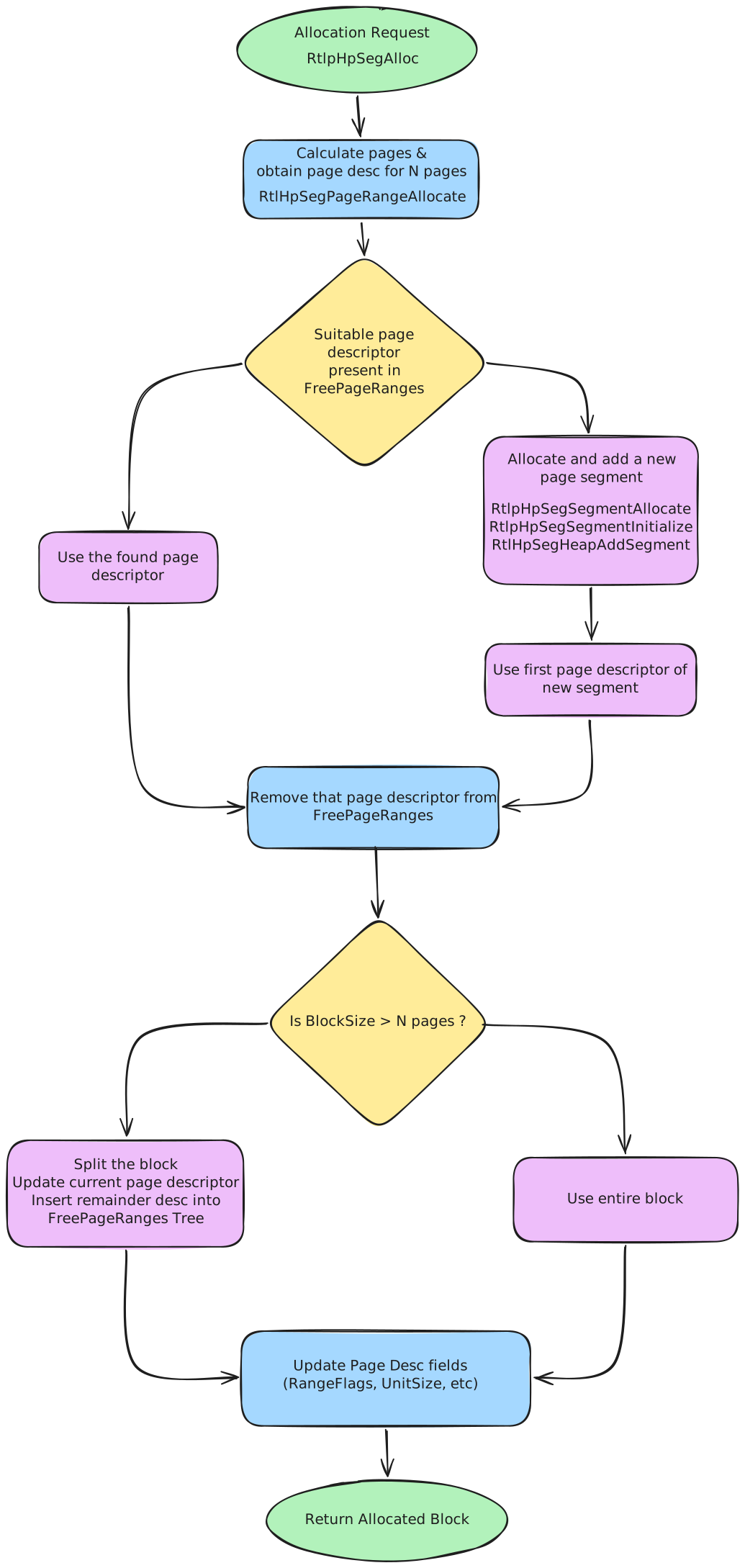
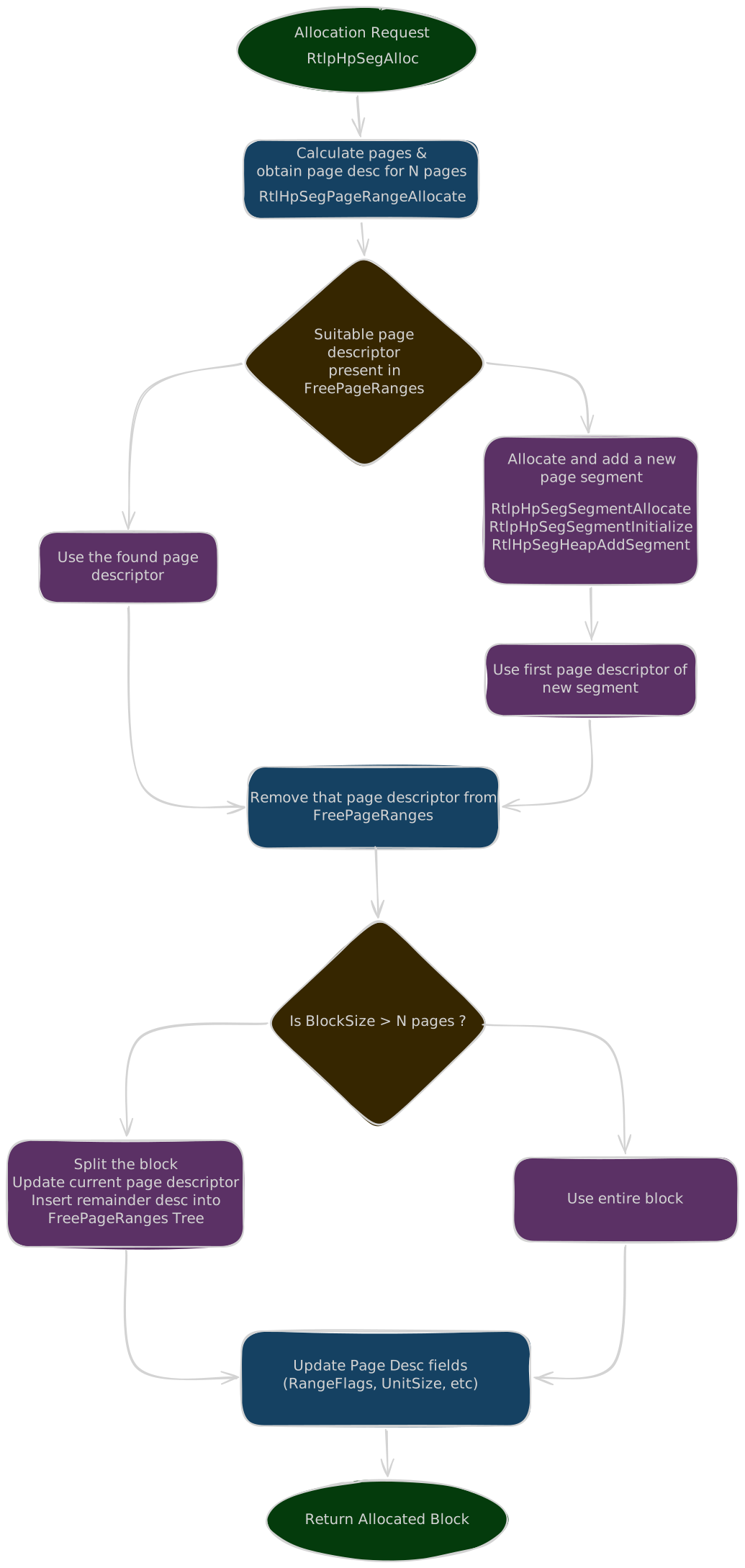
The main implementation function is nt!RtlpHpSegAlloc, using RtlpHpSegPageRangeAllocate to obtain a freed page descriptor or create a new one:
- Search
FreePageRanges, starting from the root; when the required block is larger than the node, continue in the right subtree until found or NULL. - If no suitable page descriptor is found, allocate a new page segment (
RtlpHpSegSegmentAllocate), initialize its first page descriptor (RtlpHpSegSegmentInitialize), and insert it intoSegmentListHead(RtlpHpSegHeapAddSegment). In fact only the memory required for the page segment and descriptor structures is allocated; the block part is not allocated at first. - When a page descriptor is found or created, remove it from
FreePageRanges. - If the required number of pages is smaller than the block, split the block: update the current page descriptor (UnitSize), set the remaining page descriptors (RangeFlag cleared,
CommittedPageCount,UnitOffset), and insert the remainder descriptor intoFreePageRanges. - Update the page descriptor fields (
RangeFlags,UnitSize, etc.). For example, allocating0x1337as 2 pages marks the header descriptor withRangeFlags = 0x3(First | Allocated) andUnitSize = 0x2, and the second page withRangeFlags = 0x1(Allocated) andUnitOffset = 0x1. - Check whether all pages in the block are committed: sum the
CommittedPageCountof all descriptors in the block; if the block needs committing, commit memory to the specified VA (RtlpHpSegMgrCommit -> RtlpHpAllocVA -> MmAllocatePoolMemory), then updateCommittedPageCountof all descriptors in the block. - Return the block:
Block = (Page descriptor & SegmentMask) + ((index of page descriptor) << SegContext->UnitShift)
Free Mechanism
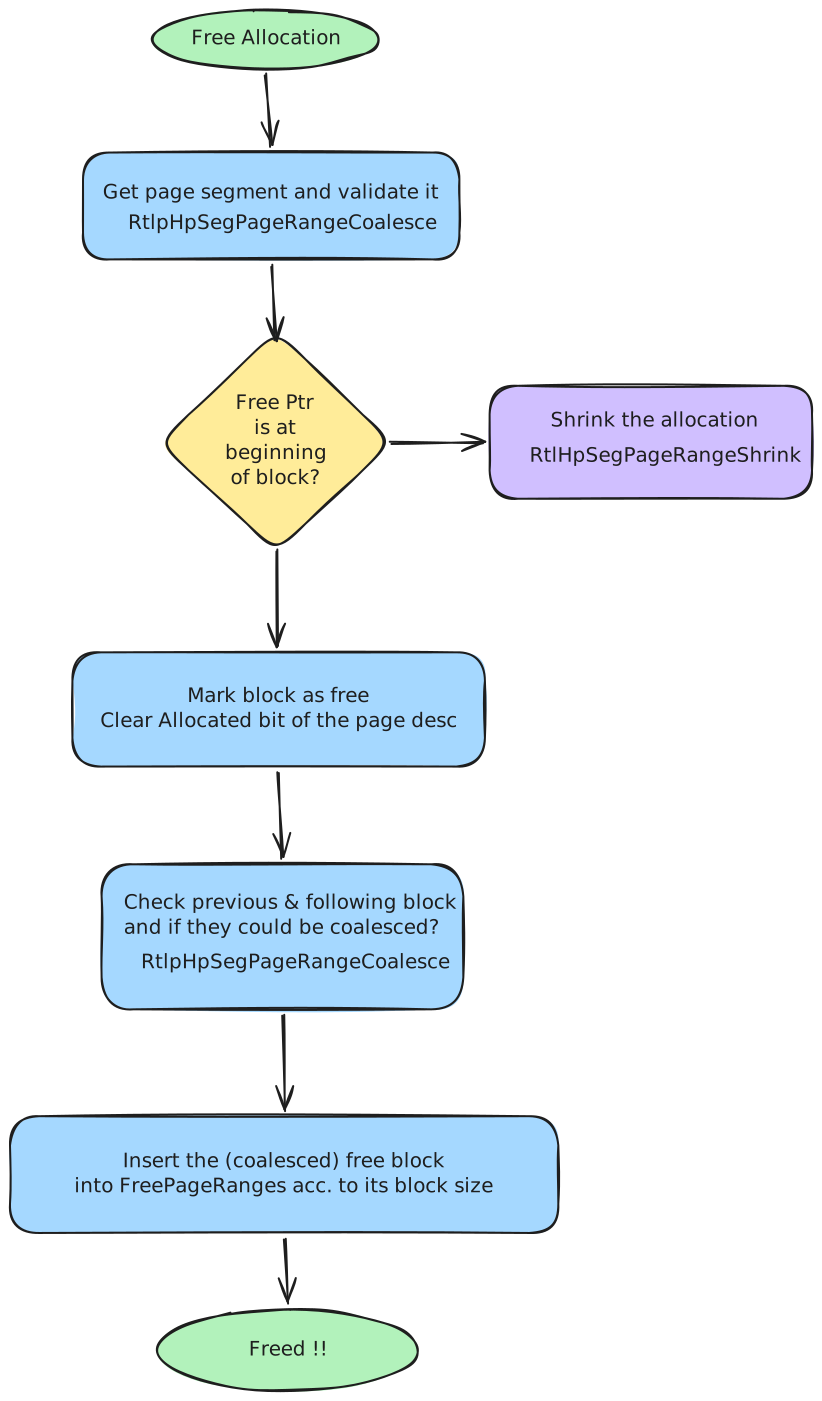
- Verify that the page segment containing the pointer is legal (
RtlpHpSegDescriptorValidate):- Signature check:
0xA2E64EADA2E64EAD == PageSegment ^ SegContext ^ RtlpHpHeapGlobals ^ Signature. - Verify the page descriptor of the page is Allocated (double-free check).
- Signature check:
- Recover the structures from the free pointer:
- Page segment =
free pointer & SegmentMask - Page descriptor =
page_segment + 0x20 * ((free pointer - page segment) >> SegContext->UnitShift) - _HEAP_SEG_CONTEXT =
page_segment ^ page_segment->Signature ^ 0xA2E64EADA2E64EAD ^ RtlpHpHeapGlobals.HeapKey
- Page segment =
- Check whether the free pointer is at the beginning of a block. If it is not, check the
RangeFlagof the page descriptor to decide whether to use the VS allocator or LFH allocator to release the memory; if the free pointer is managed directly by segment allocation, useRtlpHpSegPageRangeShrink. - Clear the Allocated bit of the page descriptor for the block, then check whether the previous and following blocks are freed; if freed, merge them (
RtlpHpSegPageRangeCoalesce):- To find the previous block, check whether the descriptor of the previous page is the beginning of a block; if not, use the
UnitOffsetof the previous page’s descriptor to compute the descriptor of the previous block. - The following block is computed using the
UnitCountof the current page descriptor. - Determine whether the descriptor at the beginning of the block has the Allocated bit set.
- To find the previous block, check whether the descriptor of the previous page is the beginning of a block; if not, use the
- If the previous block is free: remove its descriptor from
FreePageRanges, clear the first bit of the RangeFlag of the descriptor being freed, update theUnitCountof the previous block’s descriptor, and update theUnitOffsetof the last page descriptor after the merge. - If the following block is free: remove its descriptor from
FreePageRanges, clear the first bit of its RangeFlag, update theUnitCountof the descriptor being freed, and update theUnitOffsetof the last page descriptor after the merge. - Finally, insert the (coalesced) free block into
FreePageRangesaccording to its block size.