Pool Header
Pool Header
When the allocation size is <= 0xfe0, both LFH and VS allocate an additional 0x10 (16) bytes to store a _POOL_HEADER. The pool header was mostly used by the pool allocator before 19H1. Today it is basically used in a few cases to get fields like CacheAligned, PoolQuota, and PoolTrack.
The layout differs between LFH and VS:
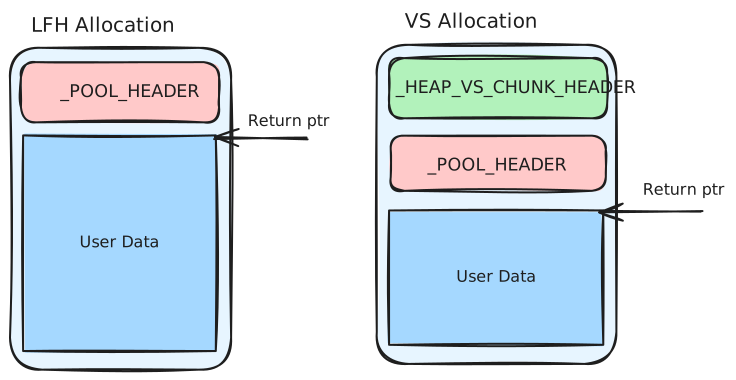
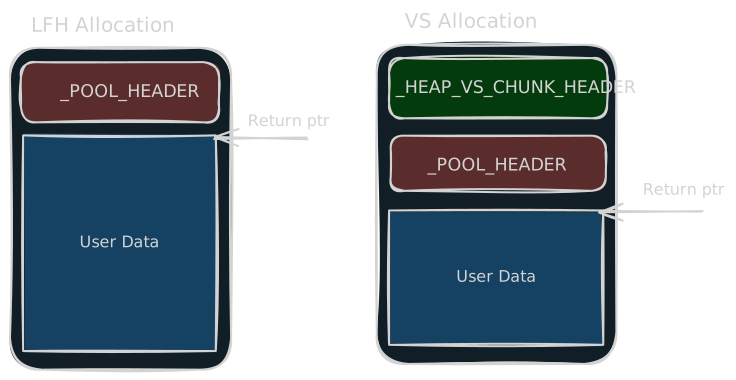
Pool Header Structure
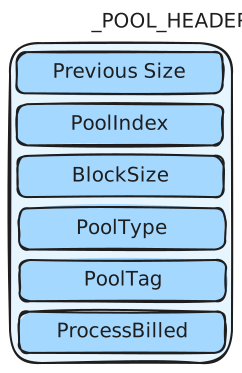
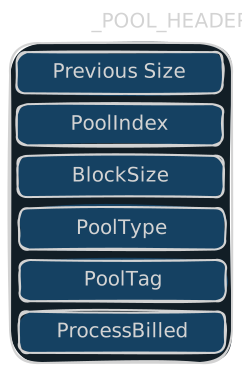
| Field | Meaning |
|---|---|
PreviousSize | Used in the CacheAligned case, indicating the offset between the previous pool header and this header. |
PoolIndex | Useless in the segment heap. |
BlockSize | The size of the block. |
PoolType | The pool type of the block. |
PoolTag | The tag string filled in when the block is allocated. When using ExAllocatePoolWithTag, you can specify the pool tag. |
ProcessBilled | Used for PoolQuota and CacheAligned. |
Since 19H1 most fields are unused. The segment heap tracks sizes in its own metadata, so the allocator only sets:
header->PoolTag       = PoolTag;
header->BlockSize     = BlockSize >> 4;
header->PreviousSize  = 0;
header->PoolType      = ChangedPoolType & 0x6D | 2;
PreviousSize/PoolIndex: unused (kept 0).PreviousSizeis only written in theCacheAlignedcase.BlockSize: only the free path reads it, to pick the Dynamic Lookaside bucket (see Dynamic Lookaside).ProcessBilled: only with thePoolQuotabit. Quota attacks from the pre-19H1 era (overwriting the pointer to get an arbitrary dereference on free) are mitigated byExpPoolQuotaCookie, generated at boot:
Encoding
ProcessBilled = KPROCESS ^ ExpPoolQuotaCookie ^ chunk address
On free the kernel decodes and validates the pointer (kernel-mode address, valid process header), so a blind overwrite bugchecks. The upside for attackers: with most fields unused, a forged header needs far less care than before 19H1.
CacheAligned
Passing CacheAligned in the pool type aligns the returned pointer to the CPU cache line (64 bytes). To keep a valid header, the chunk can hold two _POOL_HEADERs with padding in between:
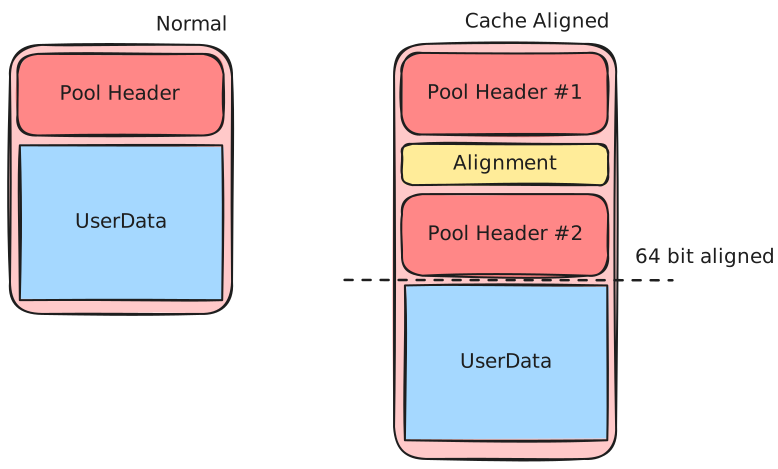
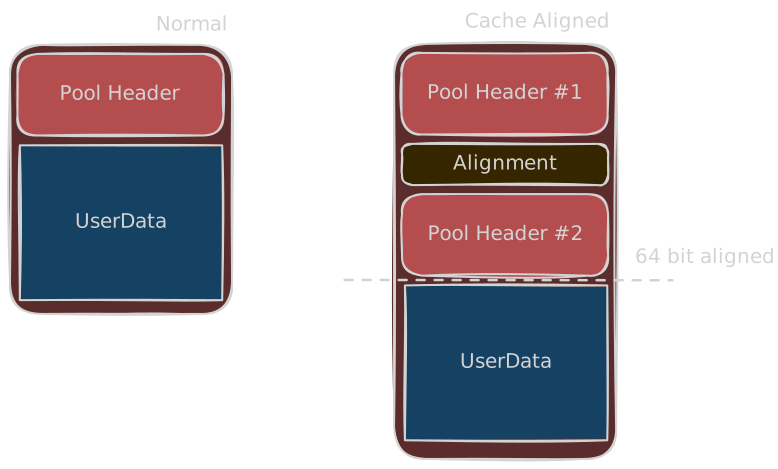
The PreviousSize of the second header points back to HEADER #1, the real chunk header (offset between the two headers). The second header gets: PreviousSize = offset to header #1, BlockSize = reduced size, PoolType with the CacheAligned bit set, and the same PoolTag. The allocator first reserves room for the padding:
if (PoolType & 4) {                            // CacheAligned bit set
    request_alloc_size += ExpCacheLineSize;    // +64 bytes for padding
    if (request_alloc_size > 0xFE0) {          // would exceed ~4 KB
        request_alloc_size -= ExpCacheLineSize; // undo the growth
        PoolType = PoolType & 0xFB;             // clear CacheAligned -> ignore it
    }
}
If the padding would push the request past 0xfe0 (~4 KB), the flag is cleared and the allocation proceeds normally.
If the alignment padding leaves room, a pointer (often called AlignedPoolHeader) is stored right after header #1: it points to the second header, XORed with ExpPoolQuotaCookie. Pre-19H1 the free path validated it; the segment-heap free path no longer does (see Aligned Chunk Confusion).