Low Fragmentation Heap
LFH is the frontend allocator for fixed-size blocks. It groups allocations by size class and manages blocks through buckets, affinity slots, and subsegments.
Why LFH?
A heap that serves every allocation from one contiguous free space quickly fragments: allocations and frees of many different sizes leave small, scattered gaps that are too small to satisfy larger requests, wasting memory. LFH mitigates this by grouping allocations into buckets by size, where every block in a bucket is the same size. A freed block is therefore immediately reusable by the next allocation of the same size, with no splitting or coalescing across sizes.
That is why it is called a low fragmentation heap: freed slots stay reusable instead of turning the heap into unusable fragments.
Allocation Size
LFH applies when Size <= 512 bytes and LFH is enabled for that size (see Activation Mechanism).
LFH Structures
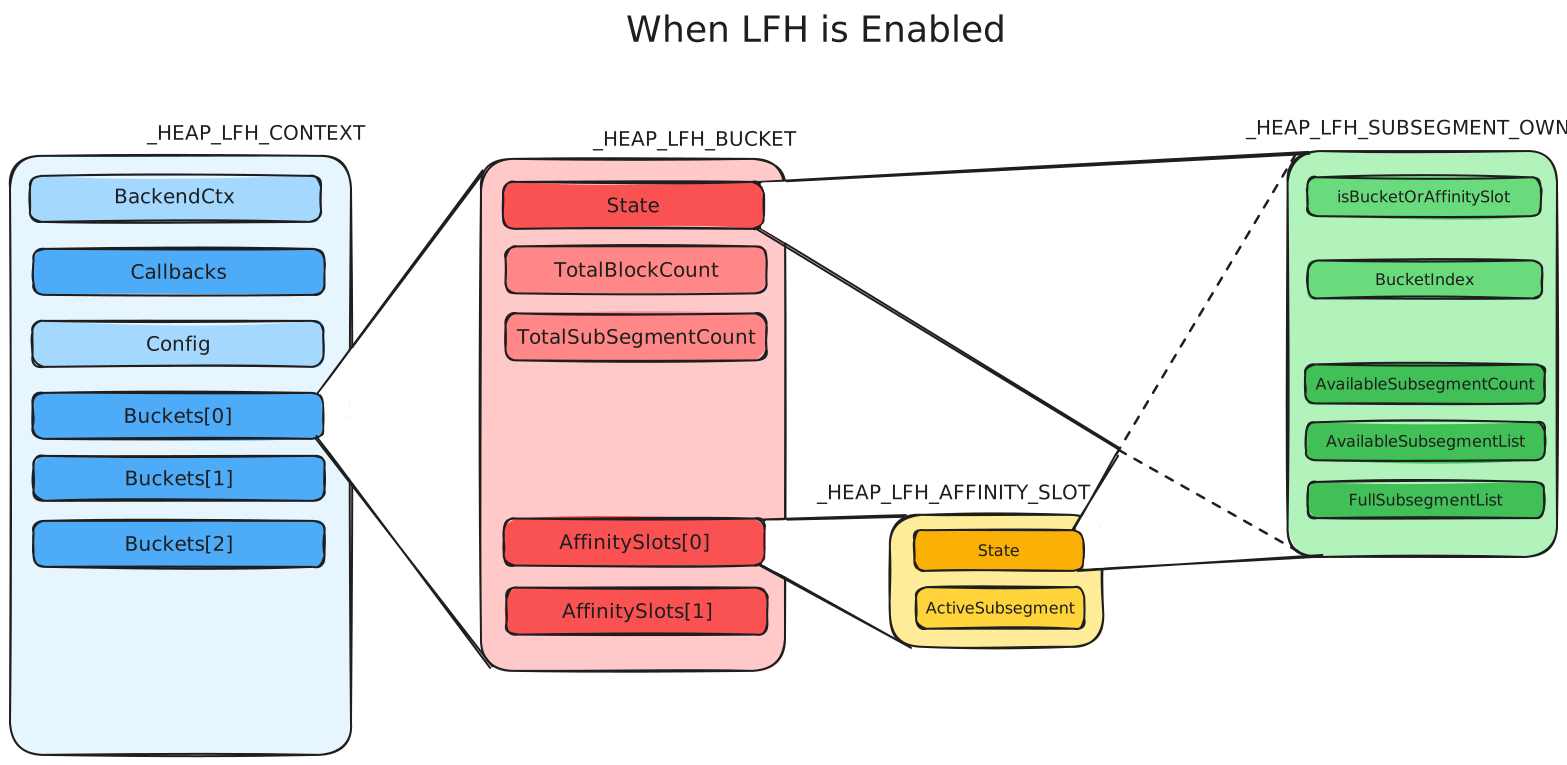
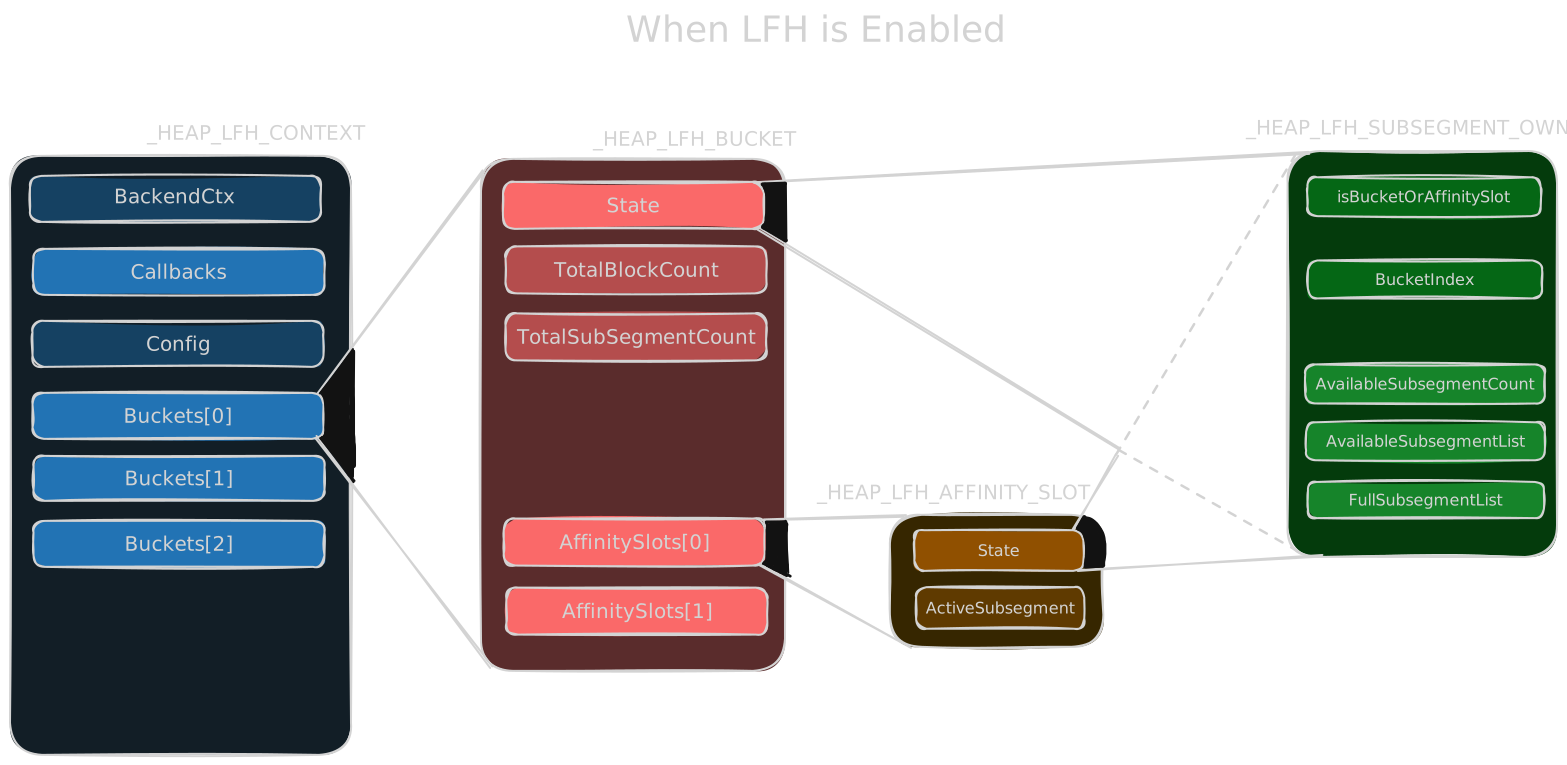
_HEAP_LFH_CONTEXT is the main LFH allocator state. It tracks the backend context, callback table, configuration, buckets, and related state for managing LFH blocks.
| Field | Meaning |
|---|---|
BackendCtx | Points to the backend allocator (_HEAP_SEG_CONTEXT) used by LFH. |
Callbacks | _HEAP_SUBALLOCATOR_CALLBACKS. Callback function table used to allocate / release subsegments: Allocate, Free, Commit, Decommit, ExtendContext. The function pointers are encoded (see below). |
Config | _RTL_HP_LFH_CONFIG. Attributes of the LFH allocator; used to determine whether the allocation size is within the LFH scope. (see LFH Config) |
Buckets[129] | Bucket array. Each bucket corresponds to blocks in a specific size range. When LFH is enabled it points to a _HEAP_LFH_BUCKET (see LFH Bucket), otherwise the entry stores the allocation counter described in Activation. |
Encoding
EncodedCallback = FunctionPointer ^ RtlpHpHeapGlobals.HeapKey ^ LfhContext
LFH Config
_RTL_HP_LFH_CONFIG describes the attributes of the LFH allocator:
| Field | Meaning |
|---|---|
MaxBlockSize | The size of the max block in LFH. |
WitholdPageCrossingBlocks | Whether there are any cross-page blocks. |
DisableRandomization | Whether to disable randomization of LFH. |
LFH Bucket
The bucket and its related structures are allocated only when LFH is enabled. A bucket is a _HEAP_LFH_BUCKET:
| Field | Meaning |
|---|---|
State | _HEAP_LFH_SUBSEGMENT_OWNER. Indicates the status of the bucket; used to manage the memory pool of LFH. |
TotalBlockCount | Total number of blocks in the bucket. |
TotalSubsegmentCount | Total number of subsegments in the bucket. |
ReciprocalBlockSize | Reciprocal of the block size (used for fast division). |
AffinitySlots[] | Pointer array to _HEAP_LFH_AFFINITY_SLOT. The main structure used to manage the memory pool used by LFH. There is only one by default. |
Affinity Slot
_HEAP_LFH_AFFINITY_SLOT is the main structure used to manage the memory pool used by LFH:
| Field | Meaning |
|---|---|
State | Same structure as State in the LFH bucket, but this one is mainly used to manage subsegments. |
ActiveSubsegment | _HEAP_LFH_FAST_REF. Points to the subsegment being used. The lowest 12 bits indicate how many blocks are available in the subsegment. |
Subsegment Owner
_HEAP_LFH_SUBSEGMENT_OWNER is the state structure used both by buckets and affinity slots:
| Field | Meaning |
|---|---|
IsBuckets | Whether this owner is the bucket (as opposed to an affinity slot). |
BucketIndex | The index of the bucket. |
AvailableSubsegmentCount | Number of available subsegments. |
AvailableSubsegmentList | _LIST_ENTRY. Points to the next available subsegment in the bucket. |
FullSubsegmentList | _LIST_ENTRY. Points to the next used-up subsegment in the bucket. |
Subsegments
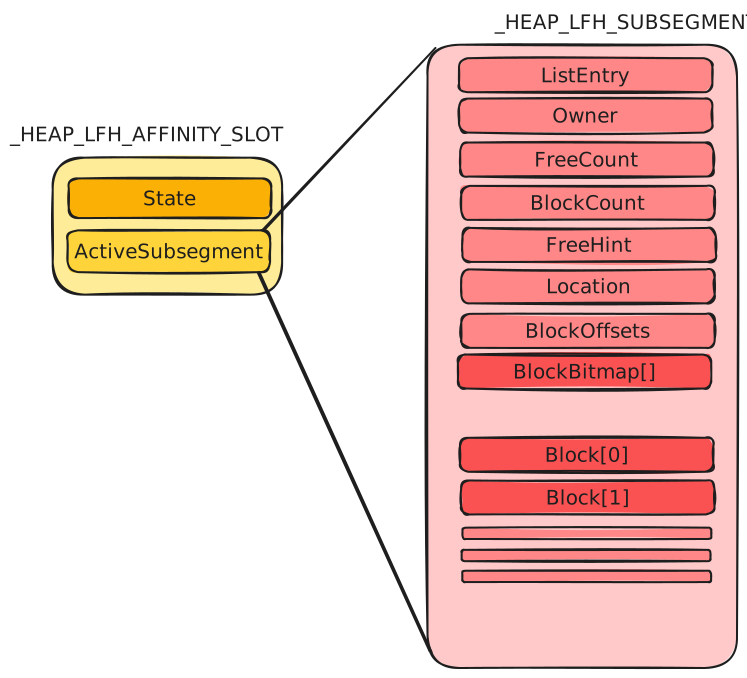
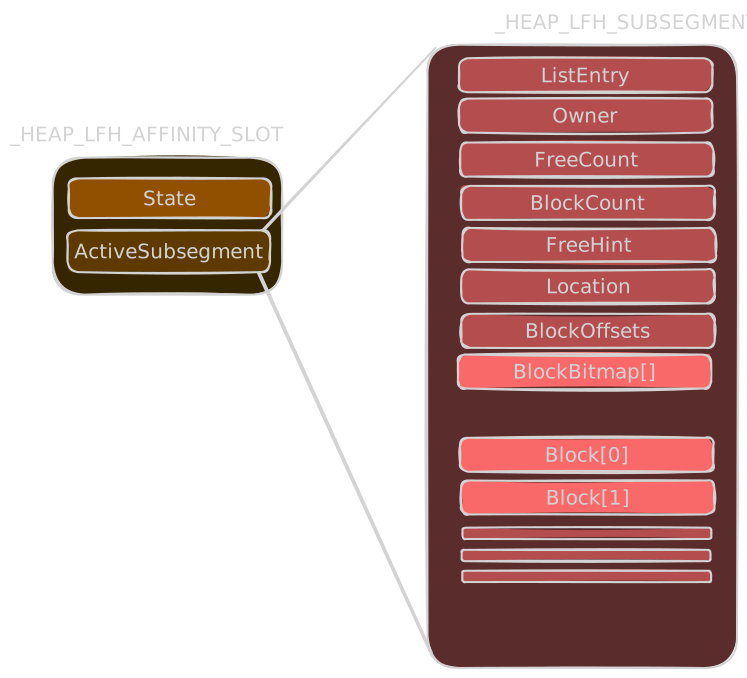
_HEAP_LFH_SUBSEGMENT contains the block metadata for a group of same-sized LFH blocks. When there is not enough memory, LFH first takes a subsegment from Buckets->State.AvailableSubsegmentList and if none is available it allocates a new subsegment from the backend allocator.
| Field | Meaning |
|---|---|
ListEntry | _LIST_ENTRY (Flink/Blink). Points to the next / previous full or available LFH subsegment. |
Owner | Points to the structure that manages the subsegment, back to the AffinitySlots->State of the bucket it belongs to. |
FreeCount | Number of freed blocks currently free in the subsegment (incremented on each free; used with BlockCount to detect an empty subsegment). |
BlockCount | Total number of blocks in this subsegment. |
FreeHint | Index of the last allocated block; updated when a higher-index block is freed |
Location | Indicates the subsegment’s current list/state (e.g., AvailableSubsegmentList(0) or FullSubsegmentList(1)). |
BlockOffsets | HEAP_LFH_SUBSEGMENT_ENCODED_OFFSETS. Indicates the block size of the subsegment and the offset of the first block. The value is encoded (see below). |
BlockBitmap | Inline array of 64-bit words (not a pointer). Each word covers 32 blocks, 2 bits per block: bit 0 = is_busy, bit 1 = unused bytes. |
Block | The allocated memory returned to the user. |
Encoded Offsets
HEAP_LFH_SUBSEGMENT_ENCODED_OFFSETS stores the block size and the offset of the first block in the subsegment:
| Field | Meaning |
|---|---|
BlockSize | The size of a block in the subsegment (the original size). |
FirstBlockOffset | The offset of the first block. FirstBlock = Subsegment + FirstBlockOffset. |
Encoding:
Encoding
EncodedData = RtlpHpHeapGlobals.LfhKey ^ BlockOffsets ^ (Subsegment >> 12)
Activation Mechanism
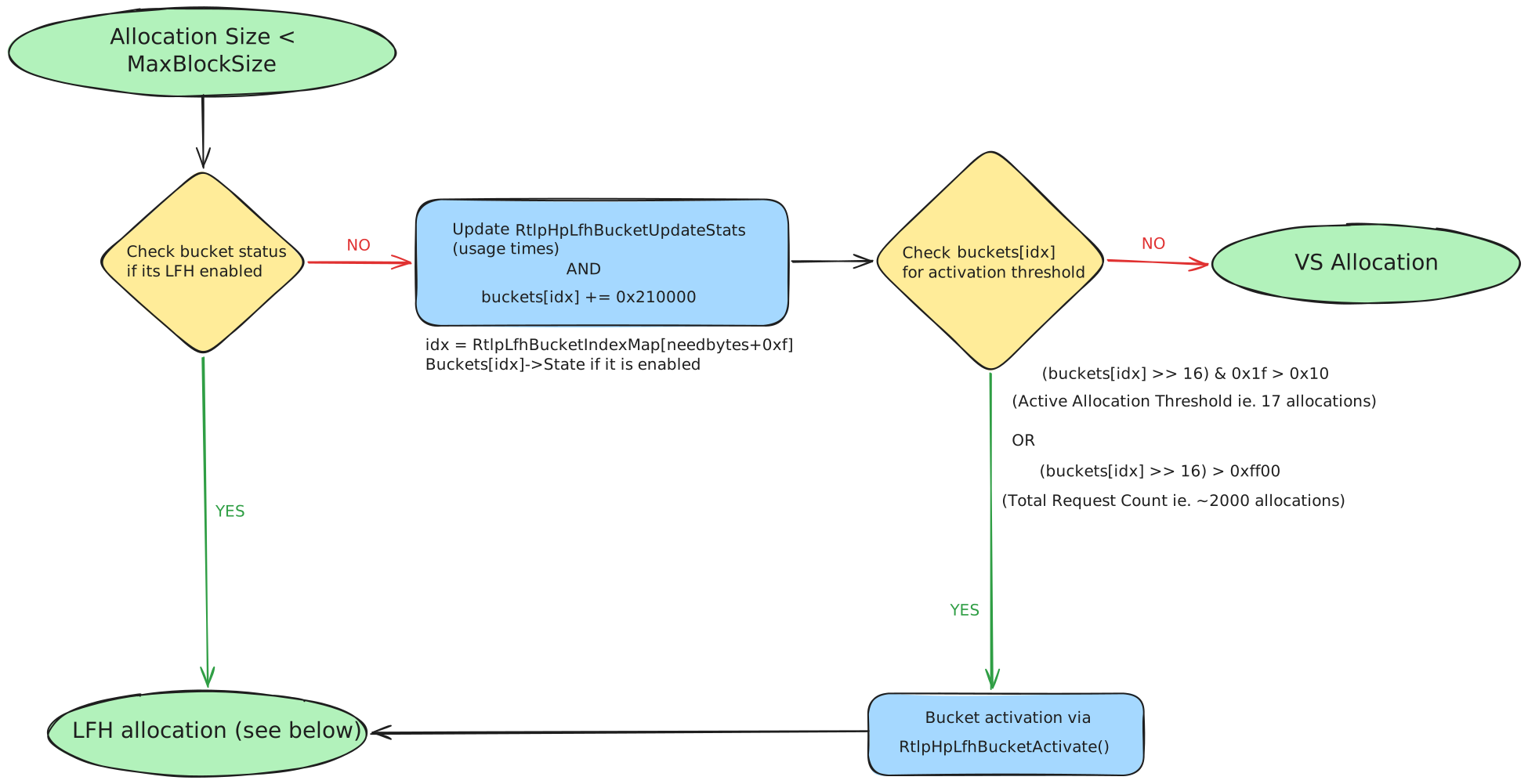
When allocating a block smaller than LfhContext->Config.MaxBlockSize, the allocator first checks whether LFH is enabled for the corresponding bucket:
- Compute the bucket index:
idx = RtlpLfhBucketIndexMap[needbytes + 0xf]. - Check
Buckets[idx]->State & 1. If set, the allocation is handled by LFH. - If LFH is not enabled, update the bucket’s usage statistics via
RtlpHpLfhBucketUpdateStats. Each allocation adds0x210000tobuckets[idx]. - LFH is activated via
RtlpHpLfhBucketActivatewhen either threshold is crossed:(buckets[idx] >> 16) & 0x1f > 0x10: the active-allocation counter exceeds0x10(16).(buckets[idx] >> 16) > 0xff00: the total-request counter exceeds0xff00(65,280). Since each allocation adds0x210000, the upper 16 bits increase by0x21(33) per allocation. Thus,0xff00 / 0x21 ≈ 1,978, giving the ~2,000-allocation threshold.
When LFH is activated, the required bucket structures (bucket, owner, affinity slot, etc.) are allocated with RtlpHpHeapExtendContext, directly from _SEGMENT_HEAP->AllocatedBase (which usually points to the end of the segment heap structure), then initialized by RtlpHpLfhBucketInitialize. Once enabled, LFH is used for every allocation of that size.
Allocation Mechanism
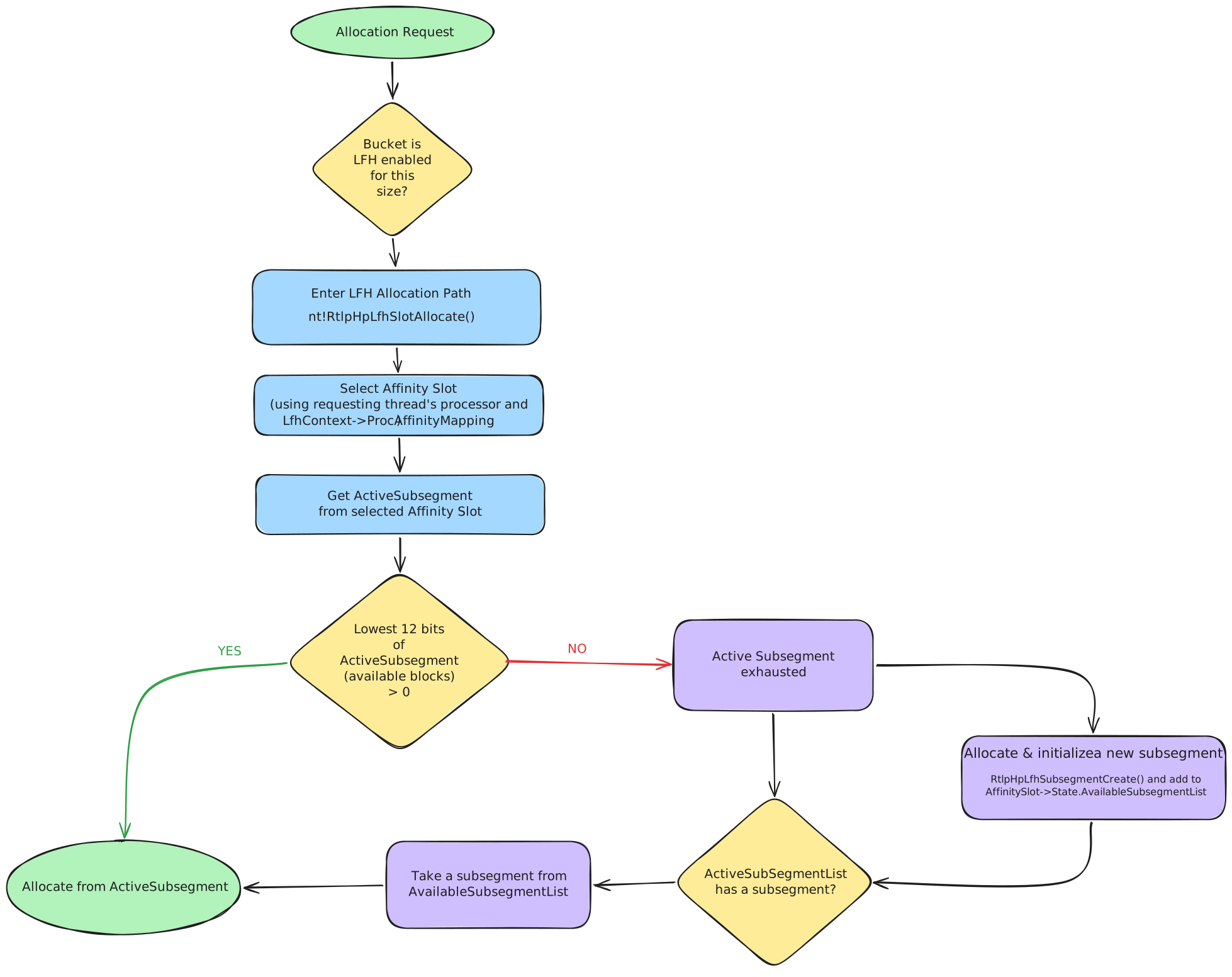
LFH allocation first finds or creates the relevant bucket for the requested size (see Activation). If LFH is enabled for the size, allocation continues in nt!RtlpHpLfhSlotAllocate:
- Select an affinity slot (using the requesting thread’s processor and
LfhContext->ProcAffinityMapping). - Get the
ActiveSubsegmentfrom the selected affinity slot. - If the lowest 12 bits of
ActiveSubsegment(available blocks) is greater than 0, allocate a block from the active subsegment. Otherwise, take a subsegment fromAvailableSubsegmentList, or if none is available allocate and initialize a new subsegment withRtlpHpLfhSubsegmentCreateand add it toAffinitySlot->State.AvailableSubsegmentList.
Allocating a Block from the Active Subsegment
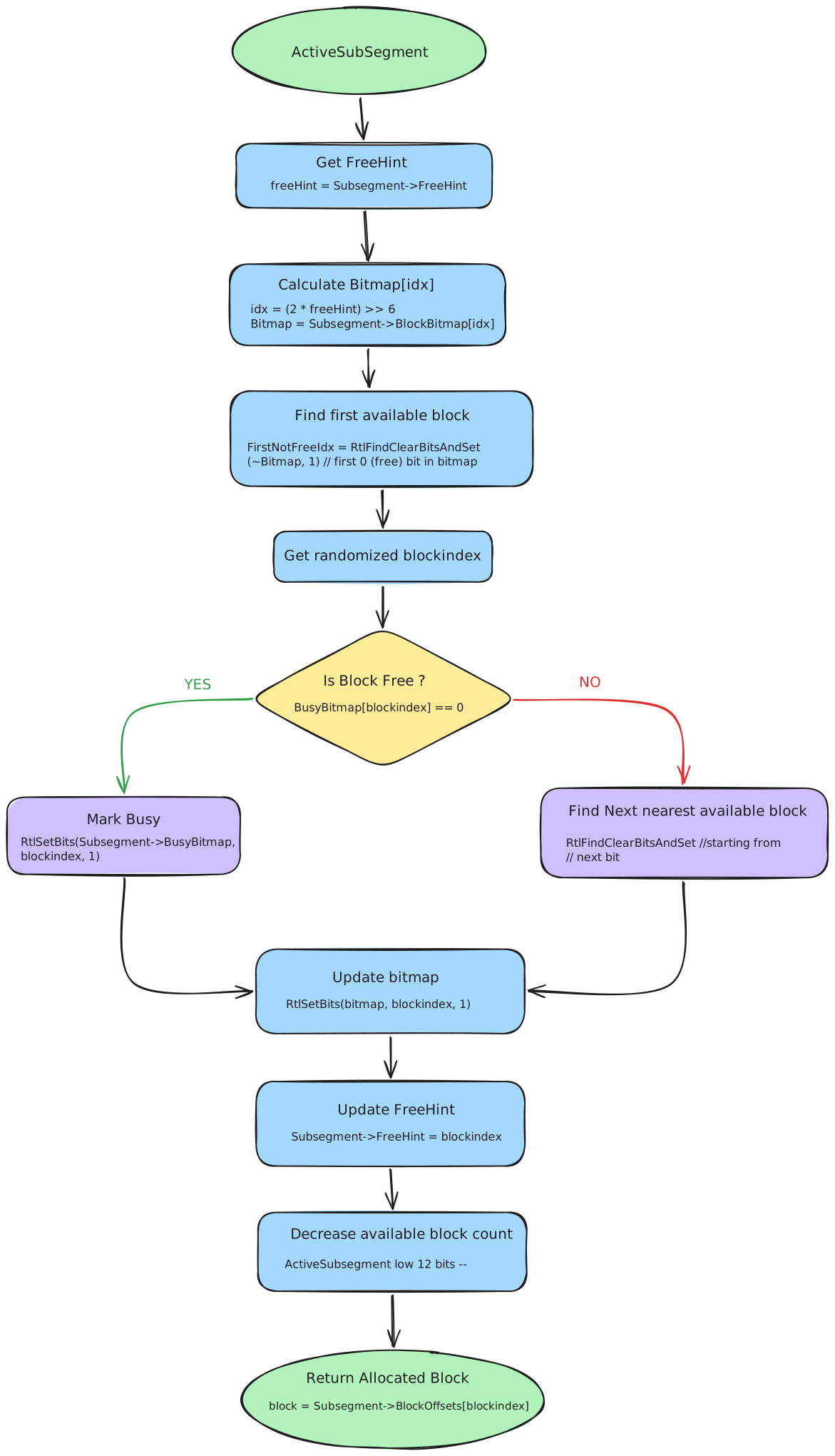
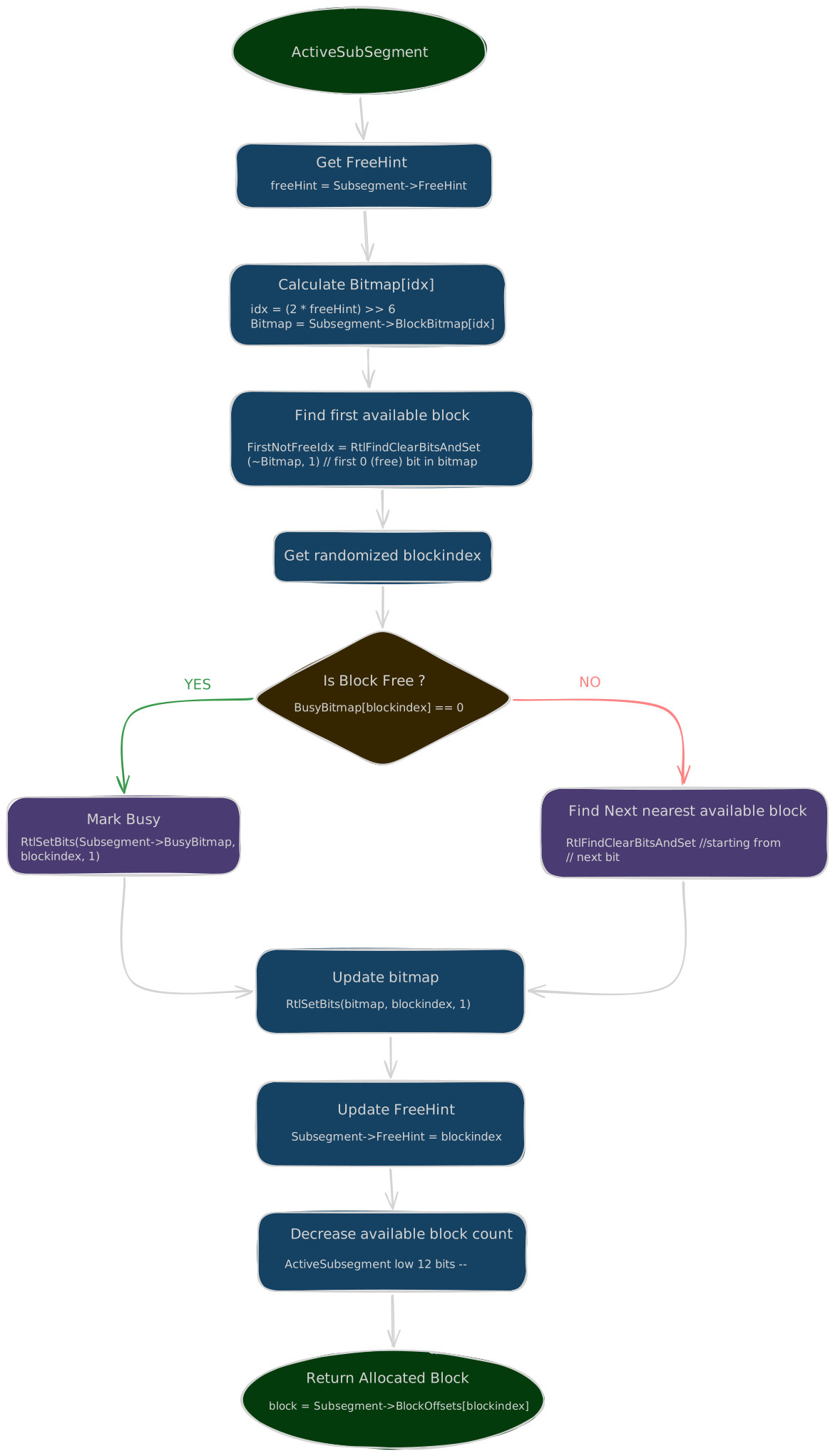
Which block is selected is randomized, similar to LFH in the NT heap:
- Get a random value: Read
RtlpLowFragHeapRandomData[x], a 256-byte table containing values from0x00–0x7f. - Locate the bitmap entry: Use
FreeHintto select the relevantBlockBitmapentry:Index = (2 * FreeHint) >> 6; thenBitmap = BlockBitmap[Index]. - Find a reference point: Locate the first allocated/busy block (
FirstNotFreeIdx) in the bitmap. This is used as the starting point for randomized selection. - Calculate the candidate block:
SearchWidth = RtlpSearchWidth[BucketIndex]randval = RtlpLowFragHeapRandomData[x]val = (SearchWidth * randval >> 7) & 0x1FFFFFEblockIndex = (FirstNotFreeIdx + val) & 0x3f
- Find a free block: Check the candidate’s busy bit. If it is busy, search for the nearest free block; if free, mark it as allocated in
BlockBitmap. - Record unused space: If the allocation does not consume the entire block, store the unused-byte count at the end of the block.
- Update metadata: Set
FreeHint = blockIndex, decrement the available-block count (low 12 bits ofActiveSubsegment), and return the block.
Free Mechanism
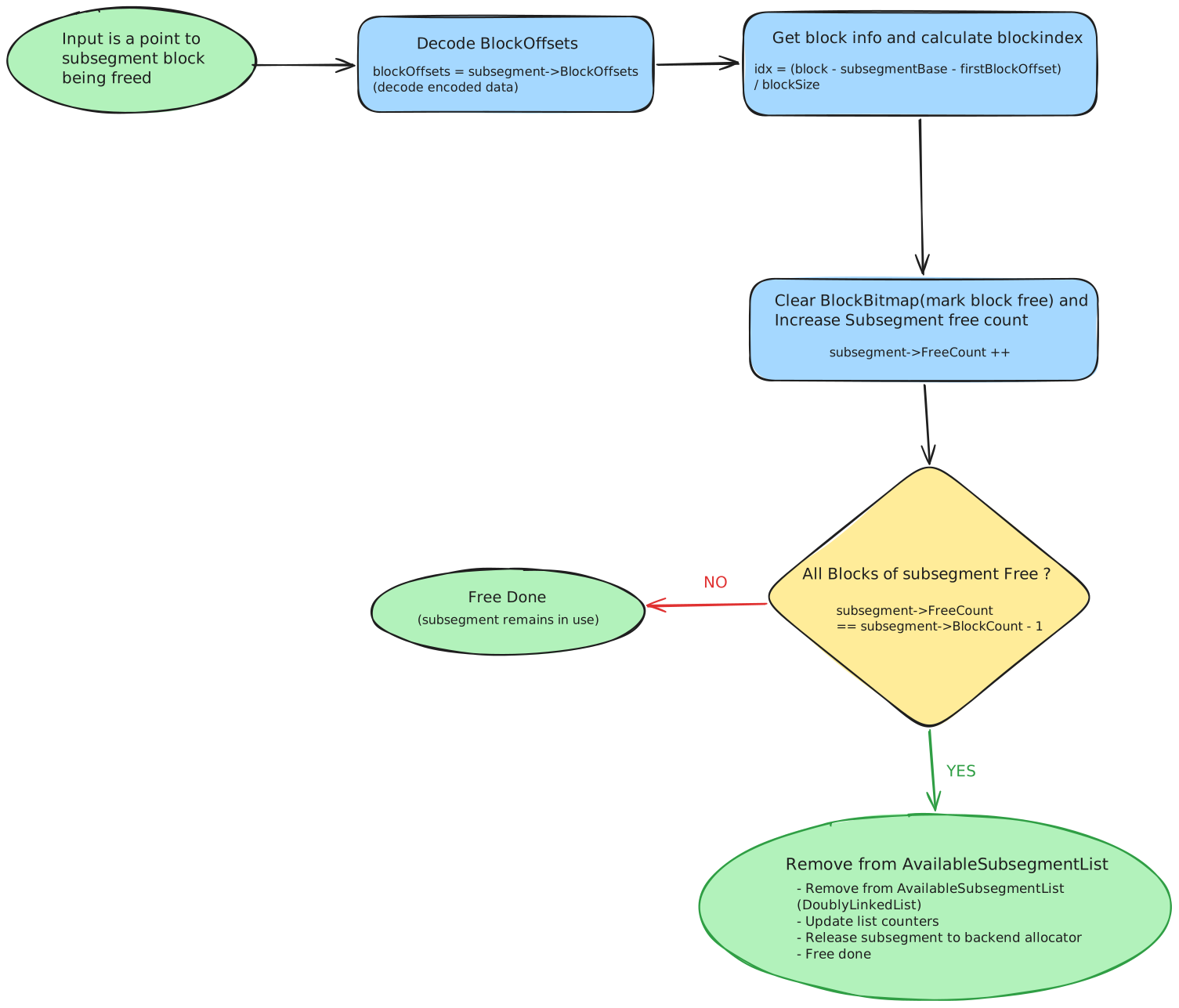
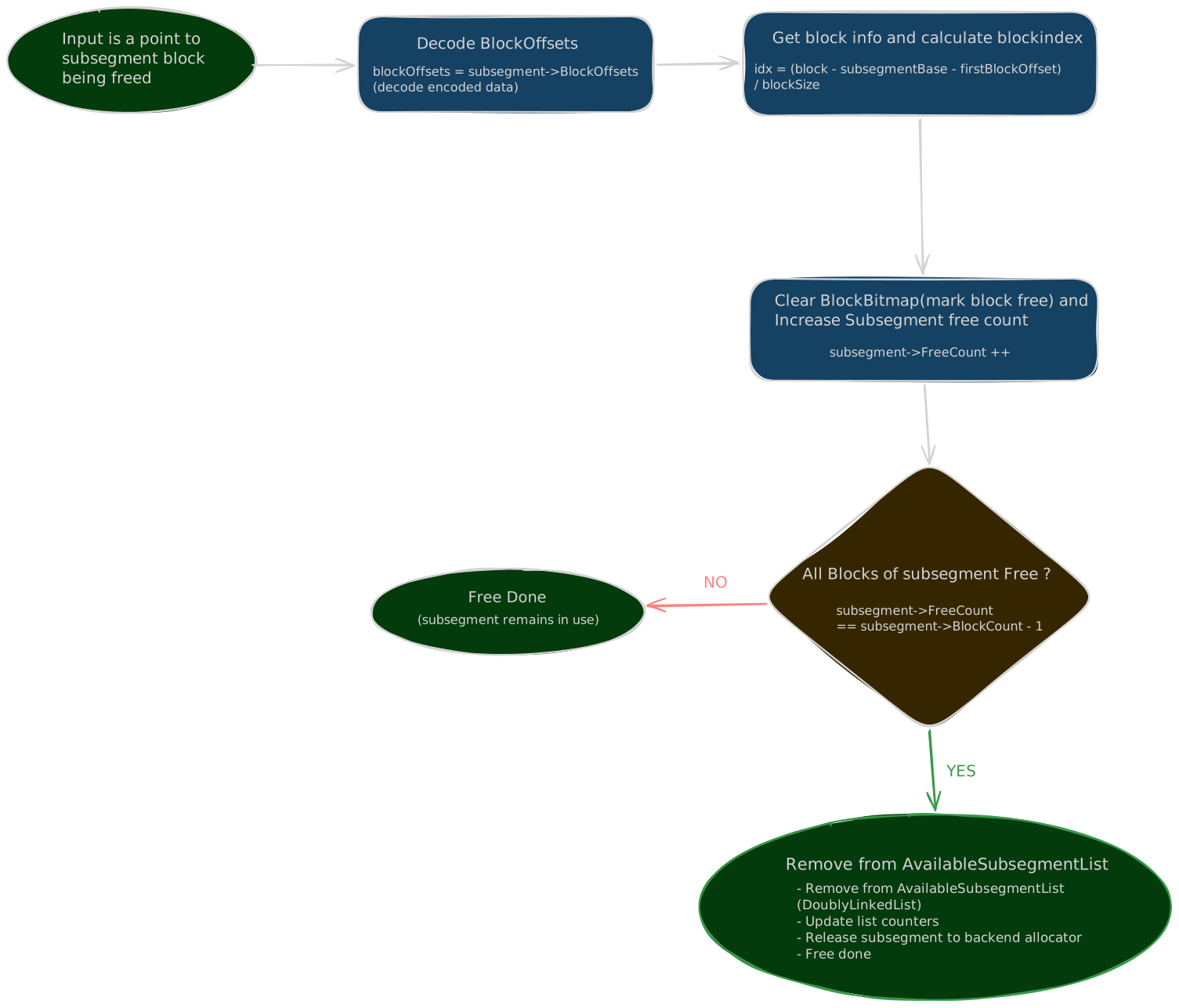
Freeing an LFH block is handled by nt!RtlpHpLfhSubsegmentFreeBlock:
- Decode
Subsegment->BlockOffsetsto recover the block size and the offset of the first block. - Compute the block index:
idx = (block - subsegmentBase - FirstBlockOffset) / BlockSize. - Clear the corresponding
BlockBitmapbit and incrementSubsegment->FreeCount. - If
FreeCount == BlockCount - 1, all blocks of the subsegment are free: remove the subsegment fromAvailableSubsegmentList(with a double-linked-list check) and release the subsegment back to the backend allocator. - Otherwise the subsegment stays in use and free is done.